
Dant Me Dard Kyun Hota Hai: Every Common Cause of Tooth Pain Explained
If you have ever searched dant me dard kyun hota hai in the middle of the night while holding an ice pack to your jaw, you already know how quickly a small ache can take over your whole day. Tooth pain is one of the most common reasons people book an emergency dental visit, and the honest truth is that the pain itself does not tell you much on its own. A dull ache and a sharp stab can come from completely different problems, and treating the wrong one wastes time while the real issue keeps getting worse underneath. This guide walks through every major cause of tooth pain in plain language, how each one usually feels, and how a dentist tells them apart, so you know exactly what you might be dealing with before you even sit in the chair.
Tooth Decay Is Still the Most Common Cause
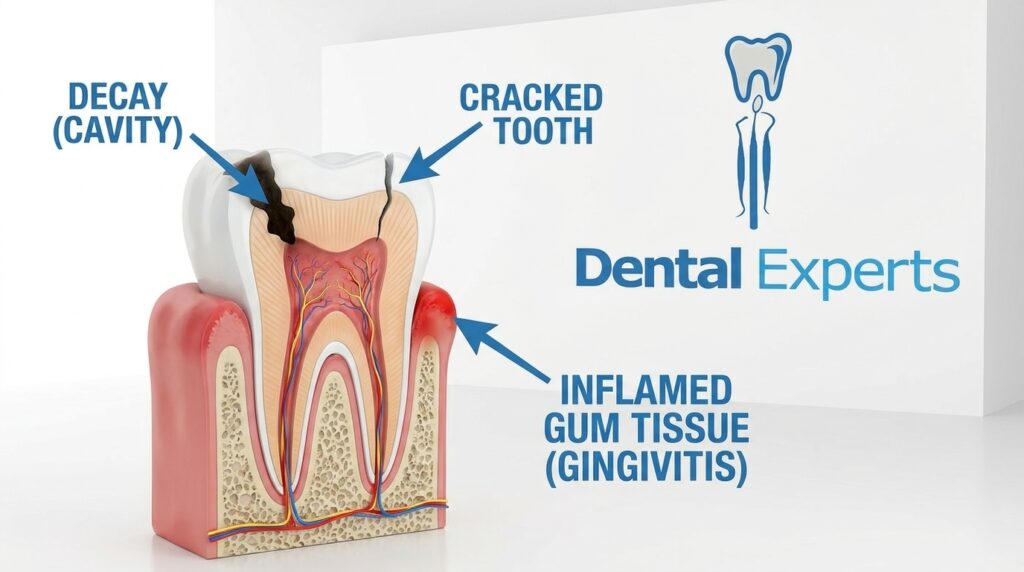
Cavities remain the single biggest reason people experience tooth pain, and this holds true across every age group. Decay starts quietly, with bacteria in the mouth converting sugar and starch into acid that slowly eats through the hard enamel layer. As long as the damage stays within the enamel, there is usually no pain at all, which is exactly why so many cavities go unnoticed until they reach the dentin, the softer layer underneath. Once decay reaches that point, hot, cold, and sweet foods start triggering a sharp, short lived twinge. Left further untreated, the decay eventually reaches the pulp, where the nerve lives, and that is when pain becomes constant, throbbing, and hard to ignore.
What makes decay related pain particularly tricky is how gradually it builds. Many people describe going from occasional sensitivity to constant discomfort over a matter of weeks, sometimes without realizing how far things had progressed until a dentist points it out during an exam. The location also matters. Cavities that form between teeth or near the gum line are often invisible without an x ray, which is one reason decay can feel like it appeared out of nowhere even though it was quietly developing for months beforehand.
Gum Disease and Pain Along the Gum Line
Not every ache comes from inside the tooth itself. Gum disease, ranging from mild gingivitis to more advanced periodontitis, causes inflammation and infection along the gum line that can radiate pain toward the surrounding teeth. As gums recede or pull away from the tooth, the root surface underneath becomes exposed. That root surface has no protective enamel, so it reacts strongly to temperature and pressure. People dealing with gum related tooth pain often notice tenderness that spreads across several teeth rather than being isolated to just one, along with bleeding, swelling, or a persistent bad taste.
Gum related pain also tends to feel different depending on the stage of the problem. Early gum irritation usually produces mild tenderness that flares up mainly during brushing or eating, while more advanced gum disease can cause a duller, more constant ache as the infection settles deeper around the tooth root. Because this type of pain builds slowly and rarely announces itself with a sharp signal the way a cavity does, many people wait far longer than they should before mentioning it to a dentist.
A Cracked or Fractured Tooth
A crack you cannot see can still cause real pain. Biting down on something hard, an old filling that has weakened the surrounding tooth structure, or even years of grinding can create a fracture line that only hurts under specific conditions, typically a sharp pain the moment you bite down and release, rather than constant discomfort. Cracked tooth pain can be maddening to diagnose because it often does not show up clearly on an x ray, and a dentist may need to test each tooth individually with gentle biting pressure to find the exact source.
Tooth Sensitivity Without Decay
Sometimes pain has nothing to do with decay or infection at all. Enamel can wear thin from years of aggressive brushing, acidic foods and drinks, or teeth grinding, exposing the sensitive dentin layer underneath. This kind of pain tends to be a quick, sharp reaction to cold air, cold drinks, or sweet foods, and it fades within a few seconds once the trigger is removed. If this pattern sounds familiar, it is worth reading more about sensitive and sore teeth, since the fix is often very different from what a cavity or infection would need.
Tooth Abscess and Infection
When decay or a crack allows bacteria to reach the pulp, an infection can develop at the root tip, forming a pocket of pus known as an abscess. This is one of the more serious causes of tooth pain, producing a deep, throbbing ache that can pulse in time with your heartbeat, along with swelling in the face or jaw, sensitivity to pressure, and sometimes fever. An abscess will not resolve on its own and needs prompt professional care, since the infection can spread to surrounding tissue and even become dangerous if ignored for too long.
Sinus Pressure Mimicking Tooth Pain
One of the more confusing causes of tooth pain has nothing to do with your teeth at all. The roots of your upper back teeth sit close to the sinus cavities, and when sinuses become inflamed or congested during a cold, flu, or sinus infection, the pressure can be felt as an ache across several upper teeth at once. A useful clue is that sinus related tooth pain usually worsens when you bend forward or tilt your head down, and it tends to affect multiple teeth in a row rather than just one.
Teeth Grinding and Clenching
Many people grind or clench their teeth at night without ever realizing it, often triggered by stress. Over time this habit wears down enamel, strains the jaw joint, and puts uneven pressure on individual teeth, all of which can lead to a dull, generalized ache that is often worst first thing in the morning. Grinding related pain frequently comes paired with jaw soreness or headaches, and if that sounds like your situation, it is worth looking into jaw pain treatment as part of the same conversation with your dentist.
An Emerging Wisdom Tooth
Wisdom teeth that are coming in, especially ones that do not have enough room to fully emerge, are a very common source of pain toward the back of the mouth. The gum tissue around a partially emerged wisdom tooth can trap food and bacteria, leading to swelling, tenderness, and sometimes a bad taste near the affected area. This kind of pain often comes and goes for weeks or months before finally becoming persistent enough to need attention.
A Recent Filling or Dental Work
If you have had a filling or other dental procedure recently, some sensitivity for a few days to a couple of weeks afterward is normal, since the tooth needs time to settle. However, pain that is severe, worsens instead of improving, or lasts beyond a few weeks usually means something is not right, whether that is a filling sitting slightly too high, decay left underneath, or a nerve that reacted more strongly than expected. You can read more about how dental fillings work and what to expect afterward if this sounds like your situation.
Tooth Pain in Children Compared to Adults
Tooth pain in children often has different roots than in adults, even though the underlying mechanisms are similar. Baby teeth have thinner enamel than permanent teeth, which means decay can progress from a small spot to a painful cavity noticeably faster in a child than in an adult with the same eating habits. Children are also more likely to develop pain from a newly emerging tooth pushing through the gum, which can feel similar to an ache but is actually a normal part of development rather than a sign of a problem. Because young children often struggle to describe or locate pain accurately, a sudden change in eating habits, chewing only on one side, or reluctance to brush a specific area can be the clearest early signal that something needs attention.
Why Tooth Pain Sometimes Feels Worse at Night
Many people notice that tooth pain intensifies once they lie down, and there is a real physical reason behind this rather than it simply being a distraction free environment. Lying flat increases blood flow and pressure to the head and jaw area, which can intensify throbbing caused by inflammation or infection. There are fewer distractions at night as well, which makes pain that was manageable during a busy day suddenly feel far more prominent once the room is quiet. If your tooth pain consistently worsens at night, it is often a useful clue that inflammation or pressure buildup, rather than simple surface sensitivity, is playing a central role.
Does Weather or Pressure Change Affect Tooth Pain
A less well known cause worth mentioning is barometric pressure change, which some people notice during flights, high altitude travel, or even sudden weather shifts. If a tooth already has a small pocket of trapped air or gas beneath a filling, a crack, or an area of decay, changes in outside pressure can cause that trapped air to expand or contract, producing a brief but sometimes sharp ache. This is far less common than decay or gum disease, but it explains why some people notice tooth pain specifically during air travel even when everything felt fine on the ground.
How to Tell Which Cause Applies to You
While self diagnosis is never a substitute for a proper exam, a few patterns can help you get a rough idea before your visit.
- Sharp, brief pain to cold or sweet, gone within seconds, often points to sensitivity or early decay.
- Constant, throbbing pain that keeps you up at night usually signals infection reaching the nerve or an abscess.
- Pain only when biting down and releasing suggests a possible crack.
- Pain across several upper teeth during a cold or sinus infection points toward sinus pressure rather than a dental cause.
- Tenderness along the gums with bleeding or swelling suggests a gum related cause.
These are starting points, not a diagnosis. A proper dental exam, sometimes with an x ray, is the only reliable way to confirm what is actually happening inside the tooth.
When Tooth Pain Becomes an Emergency
Most tooth pain can wait for a normal appointment, but certain signs mean you should not delay. Facial swelling, fever, difficulty swallowing or opening your mouth fully, or pain so severe that over the counter medication does not touch it are all signals that the situation needs urgent attention. If you are dealing with any of these, it is best to contact an emergency dentist rather than waiting to see if it improves on its own, since infections in this area can progress quickly.
Why Guessing at Home Only Goes So Far
It is completely natural to want relief the moment tooth pain starts, and there are genuine home steps that can ease discomfort temporarily while you arrange a dental visit. But because so many different problems can produce a similar feeling of pain, treating the symptom without knowing the cause means you might be masking a cavity that keeps growing, an infection that keeps spreading, or a crack that keeps worsening every time you chew. The safest approach is always to get an accurate diagnosis first, then choose the right treatment for what is actually happening, rather than treating tooth pain as one single problem with one single fix. If your pain has lasted more than a day or two, it is worth booking a proper toothache treatment visit so the actual cause can be identified and resolved. Once you know the cause, the companion guide “Daant Ka Dard Theek Karne Ka Tarika” in this series walks through the exact treatment path for each cause covered above.
Frequently Asked Questions
Kya dant ka dard apne aap theek ho sakta hai?
Mild sensitivity sometimes settles on its own if it is caused by something temporary, like a recent filling adjusting. But pain from decay, infection, or a crack will not resolve by itself and tends to get worse the longer it is left untreated.
Why does my tooth only hurt when I bite down?
This pattern is a classic sign of a cracked tooth or a filling that is sitting slightly too high, both of which put uneven pressure on the tooth during biting. A dental exam can usually confirm which one it is.
Can a sinus infection really cause tooth pain?
Yes, this is more common than most people realize. The upper back teeth sit very close to the sinus cavities, so sinus pressure and inflammation can easily be felt as an ache across several upper teeth at once.
Is throbbing tooth pain always a sign of infection?
Throbbing, constant pain, especially one that worsens at night or comes with swelling, is a strong indicator that the nerve is involved or an abscess has formed, and it should be evaluated promptly rather than waited out.
How long should I wait before seeing a dentist for tooth pain?
Mild, brief sensitivity can be monitored for a few days, but pain that is constant, worsening, or accompanied by swelling or fever should be checked as soon as possible rather than waiting it out.
