
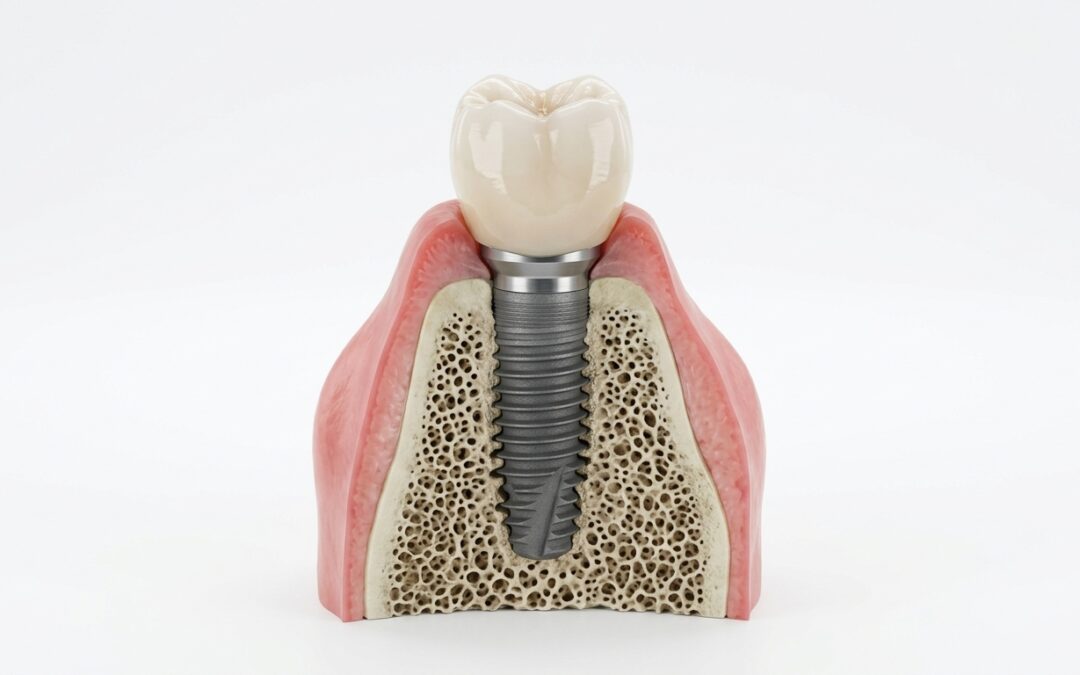
Quick answer: With good care, dental implants can last twenty years or more, and the titanium post placed in the jaw often lasts a lifetime. The crown on top usually lasts ten to fifteen years before it may need replacing due to normal wear. The biggest factors in how long an implant lasts are your gum health, your cleaning habits, and not smoking.
A dental implant is one of the bigger investments a person makes in their teeth, so it is fair to ask how long it will actually last before spending the money. The honest answer is that dental implants are designed to be a long term solution, often lasting decades, but they are not automatically permanent. How long yours last depends far more on how you look after them than on luck.
The implant post versus the crown
To answer the question properly, you have to split the implant into two parts. The implant itself is a titanium post placed in the jawbone, and once it has fused with the bone it can last a lifetime in many people. The visible part is a dental crown attached on top, and like any crown it takes daily chewing force and can wear or chip over the years, so it may need replacing after ten to fifteen years even when the post underneath is perfectly fine. When people say an implant failed, they usually mean the crown needed renewing, not that the post fell out.
What makes an implant last for decades?
The good news is that most of what decides the lifespan is in your hands. Implants last longest in people who keep their gums healthy, clean well every day, do not smoke, and see a dentist regularly. The implant cannot decay like a natural tooth, but the gum and bone holding it can become diseased if plaque builds up, and that is the main reason implants fail late. Treat an implant like a natural tooth and it tends to reward you with many years of service.
- Daily cleaning. Brush twice a day and clean around the implant to keep the gum healthy.
- No smoking. Smoking is one of the strongest causes of early implant failure.
- Regular check ups. A dentist catches gum trouble around the implant before it becomes serious.
- Protect from grinding. A night guard saves the crown if you grind your teeth.
What causes an implant to fail early?
Early failure is uncommon but worth understanding honestly. In the first weeks, an implant can fail to fuse with the bone, which is more likely in smokers, in people with uncontrolled diabetes, or where bone was thin. Later failure is almost always due to gum disease around the implant from poor cleaning. An implant placed to replace missing teeth needs a healthy foundation, so treating any gum problem first and choosing an experienced dentist both reduce the risk a great deal.
Implant, bridge or denture: which lasts longest?
Compared with the alternatives, a well kept implant usually has the longest lifespan. A bridge often lasts around ten years and relies on the neighbouring teeth, while a denture is removable and tends to need adjustment or replacement sooner. An implant stands on its own and protects the jawbone, which is why many dentists consider it the most durable option when the budget and the bone allow. It is not the cheapest choice, but over a lifetime it is often the longest lasting.
Are implants worth it long term?
Cost is the honest reason many people hesitate over implants, so it is fair to weigh the lifespan against the price. An implant costs more upfront than a bridge or a denture, but because the post can last for decades and only the crown may need renewing, the cost spread over the years it serves can compare well. You also avoid the repeated adjustments and replacements that removable options often need. None of this means an implant is right for everyone, since the budget and the bone have to be there. But when people ask whether implants are worth it, the long lifespan is a large part of the answer. A well placed implant that lasts twenty years or more is rarely the thing patients regret, while a cheaper option that fails sooner often is. The sensible approach is to weigh the years of service, not just the day one price. It is also worth remembering that an implant is largely a one time cost for most people, while cheaper options that need redoing can quietly add up over the years, which is the honest way to compare value rather than the first price alone.
Does getting an implant hurt?
A question people rarely ask aloud is whether getting an implant hurts, and the honest answer is reassuring. The placement is done under local anaesthetic, so during the procedure you feel pressure and movement but not pain. Afterwards there is usually some swelling, mild bruising and soreness for a few days, much like any minor dental surgery, and this settles with rest, cold compresses and simple pain relief taken as directed. The longer part is not discomfort but waiting, because the implant needs a few months to fuse with the bone before the final tooth goes on, and during that time most people carry on normally. Many patients say the worry beforehand was far worse than anything they actually felt. Eating soft foods for the first days, keeping the area clean as instructed, and avoiding smoking all help healing go smoothly. Understanding this calm, staged recovery removes one of the most common reasons people put off a treatment that can serve them for decades, and it sets realistic expectations so there are no surprises along the way.
How to get the most years from your implant
The routine is simple and the same habits that protect natural teeth protect implants. Clean thoroughly every day, keep your regular dental visits, avoid smoking, and do not use the implant to bite very hard objects. If you would like an honest assessment of whether an implant suits your case and how long it should last for you, you can book an appointment, and it is worth reviewing the wider dental services too, since healthy gums and teeth around the implant are part of making it last.
Medical disclaimer: This article is for general information only and is not a substitute for professional dental advice, diagnosis or treatment. Every mouth is different, so please see a qualified dentist for advice on your own situation.
Frequently Asked Questions
Do dental implants last forever?
The titanium post can last a lifetime in many people, but the crown on top usually needs replacing after ten to fifteen years. Nothing is guaranteed forever.
What is the most common reason implants fail?
Gum disease around the implant from poor cleaning is the most common late cause. Smoking and uncontrolled diabetes raise the risk too.
Can a dental implant get a cavity?
No. The implant cannot decay. But the gum and bone holding it can become diseased, which is why daily cleaning still matters.
How do I make my implant last longer?
Clean well every day, do not smoke, see your dentist regularly, and use a night guard if you grind your teeth.
Is an implant more durable than a bridge?
Usually yes. A well kept implant often outlasts a bridge, which typically lasts around ten years and depends on the neighbouring teeth.
