
How to Stop Tooth Decay Before It Gets Worse
Knowing how to stop tooth decay starts with understanding a fact most people never hear clearly, decay can only be reversed at one specific, very early stage, and after that point the goal shifts from reversal to stopping further spread through treatment. Confusing these two goals leads to wasted time on home remedies that cannot fix a cavity that has already formed, while also missing the genuine window where fluoride and better habits really can undo early damage. This guide separates what actually reverses decay from what stops it once reversal is no longer possible.
Reversing Decay at the Earliest Stage
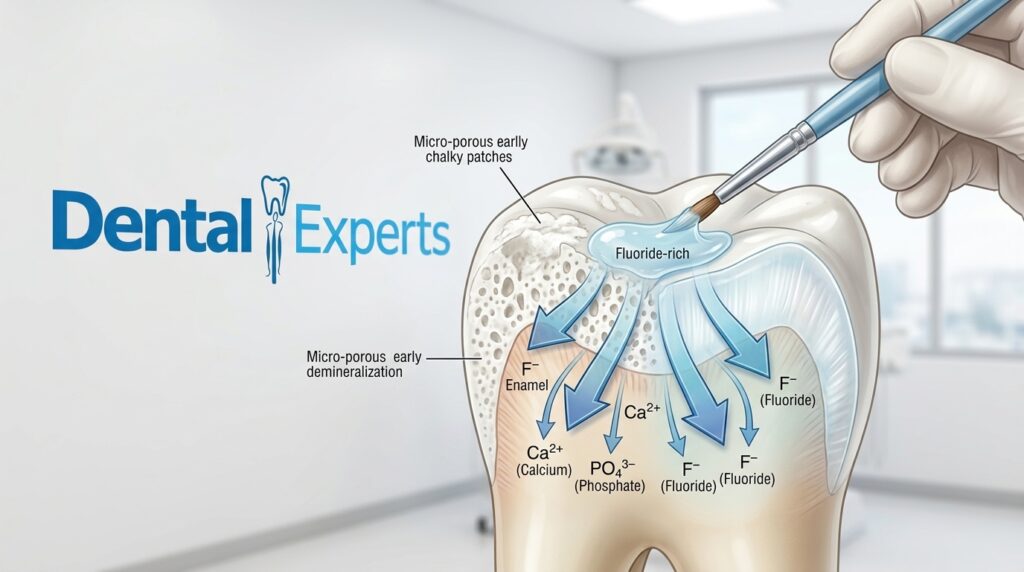
Before a true cavity forms, decay exists as demineralization, a stage where acid has pulled minerals out of the enamel surface without yet breaking through it completely. This shows up as a chalky white spot rather than a visible hole, and it is the only stage where the process can be fully reversed without a filling. Fluoride treatment, whether from toothpaste, a mouth rinse, or a professional application at a dental visit, helps redeposit minerals back into the weakened enamel. Combined with improved brushing and flossing to stop further acid exposure in that specific spot, this stage can return to healthy enamel entirely, which is exactly why routine checkups matter even when nothing hurts, since this is the only point where nothing needing a drill is still possible.
Daily Habits That Stop New Decay From Starting
Once you understand what causes decay, stopping new cavities from forming becomes a matter of consistent daily habits rather than anything complicated. Brushing twice a day with fluoride toothpaste, for a full two minutes rather than a quick rinse, removes the plaque that produces decay causing acid. Flossing once daily reaches the spaces between teeth that a toothbrush cannot, which matters since this is one of the most common spots for decay to start unnoticed. Cutting back on frequent sugary snacking, rather than eliminating sugar entirely, addresses the acid exposure window that matters most, since occasional sugar at a meal is far less damaging than the same amount spread across constant snacking.
Drinking water after eating when brushing is not immediately possible helps rinse away food particles and dilute acid in the meantime. Chewing sugar free gum containing xylitol after meals increases saliva flow, which speeds up the mouth’s own natural acid neutralizing process. None of these habits reverses an existing cavity, but together they genuinely stop new decay from starting in the first place.
Professional Treatment Options Once a Cavity Has Formed
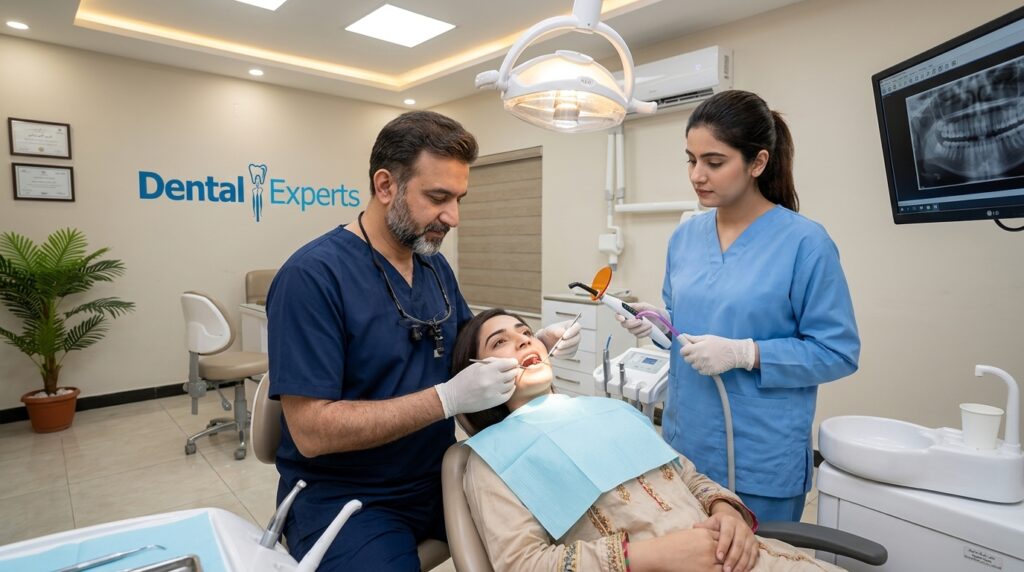
Once enamel has actually broken down into a true cavity, home care alone cannot stop or reverse it, and this is where professional treatment becomes the only real way to stop the decay from spreading further into the tooth. A filling is the standard treatment at this stage, removing the decayed portion and sealing the tooth to prevent the cavity from progressing deeper. Waiting past this point does not give the tooth a chance to heal on its own, it only allows more time for decay to reach the nerve, where treatment shifts from a straightforward filling to a root canal, a considerably more involved procedure. If pain has already started, understanding what your tooth pain means helps clarify how urgently treatment is needed.
Why Stopping Decay Requires Different Steps at Different Stages
A common mistake is applying the same approach regardless of how advanced the decay already is, when the actual right step depends entirely on the stage. Trying to reverse a true cavity with fluoride toothpaste alone will not work, since fluoride can only restore minerals to enamel that has not yet physically broken down, it cannot rebuild a hole that has already formed. Equally, rushing to a filling for a spot that is still at the demineralization stage, before a true cavity exists, may be more intervention than the situation actually needs if fluoride and improved habits could resolve it without any drilling at all. Knowing which stage you are actually dealing with, which usually requires a dentist’s exam rather than guessing, determines whether the right next step is a change in daily habits or a scheduled filling appointment.
Tracking Whether Your Prevention Efforts Are Actually Working
Stopping tooth decay is not a one time action, it is an ongoing process worth checking on periodically rather than assuming it is working simply because nothing hurts. Routine checkups every six months are the most reliable way to confirm that early demineralization spots are genuinely resolving rather than quietly progressing despite improved habits. Between visits, running your tongue over teeth periodically to notice any new rough patches, and paying attention to whether sensitivity is stable, improving, or getting worse, gives a reasonable sense of whether current habits are holding the line. If a spot you were monitoring seems to be getting worse rather than better despite consistent brushing and reduced sugar, that is a signal to move up your next appointment rather than waiting for the scheduled one.
Foods That Help Protect Against Decay
Stopping decay is not only about avoiding certain foods, some foods actively support the mouth’s natural defenses. Cheese and other dairy products help neutralize acid and provide calcium that supports enamel strength. Crunchy vegetables and fruits, such as carrots and apples, stimulate saliva production simply through the act of chewing, which helps clear food particles and buffer acid naturally. Plain water, especially fluoridated tap water where available, remains one of the simplest and most effective tools for rinsing the mouth between meals without adding any additional sugar exposure.
What Not to Rely On to Stop Decay
A few popular claims are worth addressing directly, since they circulate widely but do not actually stop decay. Oil pulling, charcoal toothpaste, and various home remedies are sometimes marketed as cavity fighting solutions, but none of them have been shown to reverse or stop decay the way fluoride and consistent mechanical cleaning do. Whitening toothpaste, while useful for surface stains, is not formulated to provide the same decay prevention benefit as a standard fluoride toothpaste, and relying on it alone can leave someone with a false sense of protection. When evaluating any product marketed for decay prevention, checking specifically for fluoride content and looking for a dentist’s recommendation remains the most reliable filter.
Building a Routine That Actually Sticks
The most effective way to stop tooth decay long term is building a routine simple enough to maintain without relying on willpower every single day. Keeping a toothbrush and floss somewhere visible rather than tucked away, brushing at consistent times tied to existing habits like right after breakfast and right before bed, and scheduling checkups six months apart on a recurring calendar reminder all remove the need to remember these tasks fresh each time. Consistency matters more than intensity here, a routine followed reliably every day outperforms a more thorough routine followed only occasionally.
Frequently Asked Questions
Can tooth decay actually be reversed once it starts?
Only at the earliest stage, called demineralization, before a true cavity has formed. Once enamel has broken down into an actual hole, a filling is needed rather than reversal through home care.
What is the single most effective habit to stop new decay?
Consistent brushing with fluoride toothpaste combined with daily flossing addresses the two main entry points for decay, the tooth surfaces and the spaces between teeth that a brush alone cannot reach.
Does cutting out sugar completely stop tooth decay?
It helps, but frequency matters more than total elimination. Reducing how often sugar is eaten throughout the day is generally more effective than eliminating it entirely but eating it all at once.
Can mouthwash alone stop a cavity from forming?
Mouthwash supports prevention but does not replace brushing and flossing, since it cannot physically remove plaque the way brushing does, only reduce bacteria temporarily.
How soon should a cavity be filled once it is found?
As soon as reasonably possible. Waiting allows decay to progress deeper into the tooth, turning what would be a simple filling into a more involved and expensive procedure over time.
