

Thanda Garam Lagne Ki Wajah Daant: Every Real Cause of Tooth Sensitivity Explained
If a sip of cold water or a spoon of hot tea suddenly makes you wince, you have probably typed thanda garam lagne ki wajah daant into your phone more than once. That sharp, quick reaction is one of the most common dental complaints, and the honest answer is that it can come from several completely different problems that all happen to feel similar in the moment. Some causes are minor and easy to manage at home, while others are a warning sign that something underneath the surface needs real treatment. This guide walks through every genuine cause of hot and cold sensitivity, how each one actually feels, and how to tell which one applies to you before you sit in the dentist’s chair.
Enamel Erosion Is the Most Common Reason
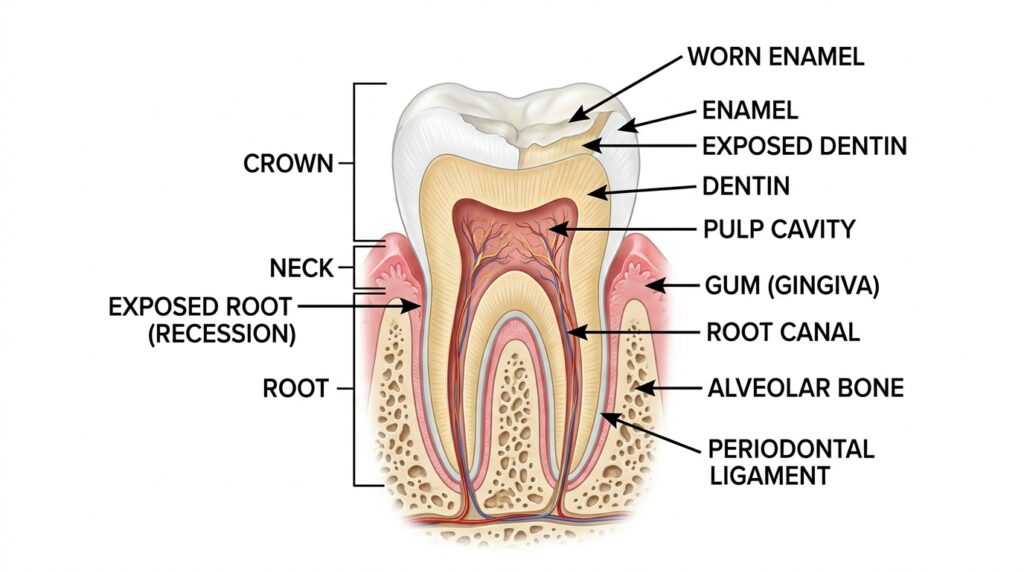
Enamel is the hard outer layer that protects the sensitive dentin underneath, and once it wears thin, temperature changes reach the nerve far more easily. This wearing down usually happens gradually from acidic foods and drinks, aggressive brushing with a hard bristled brush, or years of small everyday wear. Once dentin is exposed, hot and cold sensations travel through tiny tubules straight to the nerve, producing that quick, sharp jolt of pain that fades within a few seconds once the trigger is gone. This is by far the most common explanation when someone asks why thanda garam lagne ki wajah daant is bothering them, since enamel erosion affects a huge share of adults at some point.
Gum Recession and Exposed Roots
Not every case of sensitivity starts at the top of the tooth. When gums recede, whether from aggressive brushing, gum disease, or simply age, the root surface underneath becomes exposed. Unlike the crown of the tooth, roots have no enamel covering them at all, only a much thinner layer called cementum, which means they react strongly to both temperature and touch. People with gum recession often notice sensitivity concentrated along the gum line rather than across the whole tooth, and it frequently affects several teeth at once rather than just one.
Cavities Hiding Beneath the Surface
A cavity does not always announce itself with obvious pain right away. Early and moderate decay often shows up first as sensitivity to sweet foods and temperature changes, well before it becomes a constant ache. If sensitivity is limited to one specific tooth rather than spread across several, and especially if it lingers a little longer than a few seconds after the trigger is removed, decay is a likely explanation. This is one of the reasons dentists always want to physically examine a sensitive tooth rather than assume it is simple enamel wear, since a small cavity can hide between teeth or near the gum line where it is not visible without an x ray.
A Cracked Tooth or an Old Filling
A hairline crack that you cannot see can still let temperature and pressure reach the nerve underneath. This type of sensitivity often has a distinctive pattern, a sharp pain the moment you bite down on something cold, or a jolt when air passes over a very specific spot, rather than a general reaction across the whole mouth. Old fillings can cause a similar effect if the seal between the filling and the tooth has started to break down, allowing temperature and bacteria to reach the tooth underneath more easily than before.
Teeth Grinding Wearing Down Enamel From Within
Many people grind or clench their teeth at night without realizing it, often driven by stress. Over months and years, this habit wears down enamel from repeated pressure, sometimes faster than diet or brushing habits alone would cause. Grinding related sensitivity tends to be more generalized across several teeth, is often worse first thing in the morning, and frequently comes paired with jaw soreness or a dull morning headache. If this pattern sounds familiar, it is worth discussing with your dentist alongside the sensitivity itself, since a night guard often solves both problems at once.
Recent Dental Work and Temporary Sensitivity
If you have had a filling, a crown, or a whitening treatment recently, some sensitivity to hot and cold for a few days to a couple of weeks afterward is completely normal, since the tooth needs time to settle after the procedure. This kind of sensitivity should steadily improve rather than get worse. If it is still bothering you well beyond a few weeks, or if it is getting worse instead of better, that pattern usually means something needs to be checked rather than just given more time.
Whitening Products and Sensitivity
Teeth whitening, whether done at a clinic or with an over the counter kit at home, temporarily makes teeth more porous, which allows temperature to reach the nerve more easily for a short period. This kind of sensitivity is usually mild, affects the whole set of teeth being whitened rather than just one, and settles down within a few days once the whitening process is complete. Using a product specifically designed for sensitive teeth, or spacing out whitening sessions with more time between them, usually reduces how noticeable this effect feels.
Sensitivity in Children Compared to Adults
Children can experience thanda garam lagne ki wajah daant for slightly different reasons than adults. Baby teeth have thinner enamel to begin with, so decay related sensitivity can develop faster than in an adult with similar habits. Newly emerging permanent teeth can also feel briefly sensitive as they settle into place, which is a normal part of development rather than a sign of a problem. Because young children often cannot describe sensitivity clearly, a parent noticing a child suddenly avoiding cold drinks or chewing only on one side is often the clearest early signal.
How Long Sensitivity Should Actually Last
A useful way to judge sensitivity is by how long it lingers after the trigger is gone. A quick jolt that fades within a few seconds usually points toward enamel wear, mild gum recession, or a recent dental procedure settling down. Pain that lingers for a minute or more after the hot or cold trigger is removed is a different situation, and it often means the nerve inside the tooth is more seriously affected, sometimes by decay that has progressed further than simple surface sensitivity. This distinction alone helps a dentist narrow down what is actually happening before any exam even begins.
When Thanda Garam Lagna Means You Need a Dentist
Occasional mild sensitivity that comes and goes is common enough that it does not always need urgent attention. But certain patterns are a clear signal to book a proper exam rather than wait. Pain that lingers well after the trigger is gone, sensitivity limited to one specific tooth rather than spread across several, sensitivity that is getting worse over weeks instead of staying the same, or sensitivity paired with visible swelling or a bad taste all point toward a cause that will not resolve on its own. If any of this sounds like your situation, it is worth booking a [toothache treatment](https://dentalexperts.pk/teeth-pain/) visit so the actual cause gets identified properly.
How Sensitivity Is Actually Diagnosed
A dentist evaluating sensitivity usually starts by asking exactly how the pain feels, how long it lasts, and which teeth are affected, since these details narrow down the likely cause before any physical exam even begins. A visual check for visible decay, worn enamel, or gum recession follows, along with gentle testing using cold air or a light tap on individual teeth to pinpoint the exact source. An x ray is often used as well, since it reveals decay between teeth or beneath the gum line that is invisible to the eye. This structured process is why guessing at home rarely gets the diagnosis right, even when the sensitivity feels obvious in the moment.

Managing Sensitivity While You Wait for an Appointment
A few genuine steps can make daily life more comfortable while you arrange a proper visit. Switching to a toothpaste formulated for sensitive teeth and giving it two to three weeks of consistent use often makes a real difference, since these products work gradually by blocking the tubules that transmit sensation to the nerve. Using a soft bristled toothbrush and a gentler brushing technique reduces further enamel wear. Avoiding extremely hot, cold, or acidic foods and drinks in the meantime keeps the discomfort manageable without masking a problem that genuinely needs to be checked.
Preventing Sensitivity From Getting Worse
Long term prevention comes down to protecting enamel and gum tissue consistently rather than reacting only once sensitivity starts. Brushing with a soft bristled brush using gentle, circular motion rather than aggressive back and forth scrubbing protects both enamel and gum tissue. Cutting back on frequent acidic drinks and snacks reduces the steady erosion that leads to sensitivity over time. Routine checkups every six months catch early decay and gum recession while they are still small and easy to manage. If grinding is part of your pattern, wearing a night guard prevents ongoing enamel wear that would otherwise continue every single night.
Why Sensitivity Should Not Be Ignored Long Term
It is tempting to simply avoid cold drinks and hot tea and move on with life once sensitivity settles into a manageable pattern. But because sensitivity can be an early signal of decay, gum recession, or a crack that keeps getting worse quietly underneath, ignoring it for months or years often means the eventual fix is more involved than it would have been if addressed early. A small area of decay caught early is a simple filling. The same decay left unchecked for a year or more can progress into something that needs a root canal instead. If your sensitivity has been a consistent pattern rather than a one time event, it is worth exploring [restorative treatment options](https://dentalexperts.pk/best-medicine-for-tooth-pain-choosing-the-right-solution-for-toothache/) that address the actual cause rather than just managing the symptom indefinitely.
Frequently Asked Questions
Kya thanda garam lagna hamesha cavity ki wajah se hota hai?
No, sensitivity to hot and cold is often caused by enamel wear or gum recession rather than a cavity, but a cavity is common enough that a dentist should rule it out, especially if the sensitivity is limited to one tooth.
Why does cold water hurt more than hot food for some people?
Nerve fibers inside the tooth respond more strongly and more quickly to cold than to heat in most people, which is why cold triggers tend to produce a sharper, more immediate reaction even when both extremes are technically uncomfortable.
Can sensitive teeth toothpaste actually fix the problem?
It genuinely reduces the sensation by blocking the tubules that carry temperature to the nerve, but it does not fix an underlying cause like a cavity or a crack. It works best for enamel wear and mild gum recession rather than more serious causes.
Is it normal for a new filling to feel sensitive to cold?
Yes, mild sensitivity for one to two weeks after a filling is common while the tooth settles. Sensitivity that is severe, worsening, or lasting beyond a few weeks should be checked rather than assumed to be normal healing.
Should children with sensitive teeth be treated differently than adults?
The evaluation process is similar, but since baby teeth have thinner enamel, sensitivity in children can point to faster progressing decay, so it is worth having a dentist check sooner rather than waiting to see if it resolves on its own.
