

Quick Answer
Tooth pain feels worse at night mainly because lying down increases blood pressure in the head, which raises pressure inside an already inflamed tooth, and because the day’s distractions are gone. To get through tonight: sleep with your head raised on two pillows, take paracetamol or ibuprofen as the packet directs, use a cold compress on the outside of the cheek, rinse with warm salt water, and avoid very hot, cold or sweet food before bed. A toothache that reliably wakes you from sleep usually means inflamed nerve tissue that needs a dentist within days, not weeks.
Everyone with a serious toothache learns the same strange schedule: manageable all day, monstrous at 2 am. This is not imagination and not bad luck; it has mechanics. A painful tooth is usually a pressurized tooth. Inflamed tissue inside the rigid chamber of the tooth has nowhere to swell, so pressure builds against the nerve. Lie down, and gravity stops draining blood away from your head; more blood flows to the head, pressure inside the tooth rises further, and the dull ache of the afternoon becomes the throb that owns your night. Add the silence, no work, no traffic, no conversation competing for your brain’s attention, and pain that was background noise becomes the only signal.
There is also a message in the timing worth taking seriously. Sensitivity that flicks on and off with cold water is one category of problem. Pain that arrives on its own at night, throbs with your heartbeat, and wakes you from sleep is another category entirely; it is the classic signature of a nerve inflamed beyond the point of calming down, the stage dentists call irreversible pulpitis. That tooth is telling you its future, and every remedy below is honest about its role: getting you through the night in one piece, not fixing what is causing the pain, causes we mapped in detail in our tooth pain guide.
Why Night Makes It Worse
| Factor | What happens |
| Lying flat | More blood flow and pressure in the head; pressure inside the inflamed tooth rises |
| No distractions | The brain has nothing competing with the pain signal |
| Night grinding and clenching | Adds mechanical load to a tooth that is already inflamed |
| Late heavy or sweet meals | Sugar and temperature trigger a vulnerable tooth just before bed |
| Sinus pressure when lying down | Blocked sinuses press on upper back teeth roots and mimic toothache |
That last row explains a common mystery: several upper teeth aching together during flu season, worse lying down, often with a blocked nose, is frequently the sinus, not the teeth. The pattern still deserves a checkup if it persists, because guessing wrong in either direction wastes weeks.
How to Sleep With a Toothache Tonight
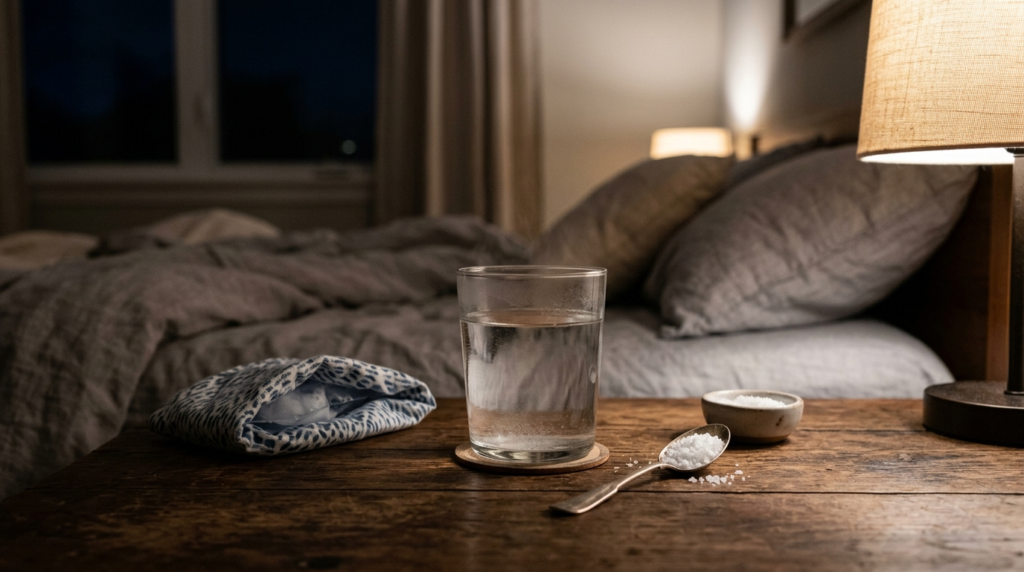
Raise your head on two pillows or sleep half-propped; this alone takes the edge off the pressure mechanism. Take a painkiller you tolerate, paracetamol or ibuprofen, exactly as the packet or your doctor directs, timed about 30 to 45 minutes before you want to sleep so it is working when your head hits the pillow. Hold a cold compress or cloth-wrapped ice against the outside of the cheek for 15 minutes; cold shrinks vessels and quiets the throb. Rinse gently with warm salt water, half a teaspoon of salt in a glass of warm water, which soothes gums and clears food debris from the painful area. Brush and floss gently around the tooth, because a trapped shred of food against the gum can be a surprising share of the pain. Eat nothing very hot, cold or sweet in the last hour before bed, and skip the late-night chai on the painful side. Clove or clove oil on the tooth has a genuine mild numbing effect and is fine as a cultural standby, with two honest limits: the relief is short, and undiluted oil burning the gum is common, so use a drop on cotton, not a soaked mouthful.
What Not to Do at Night
Do not place an aspirin tablet against the gum; it does not work through contact and it chemically burns the tissue, adding a second injury. Do not use a hot compress on the face for a suspected infection; heat draws swelling outward and can worsen it, and warmth that relieves briefly often inflames later. Do not start leftover or pharmacy antibiotics on your own; a night toothache is almost never something a first antibiotic dose would touch by morning, and self-medication is the habit that turns treatable infections into resistant ones. And do not double painkiller doses when one dose disappoints; pain that overrides a proper dose is information that you need a dentist, not more tablets.
What Night Pain Is Telling You About the Tooth
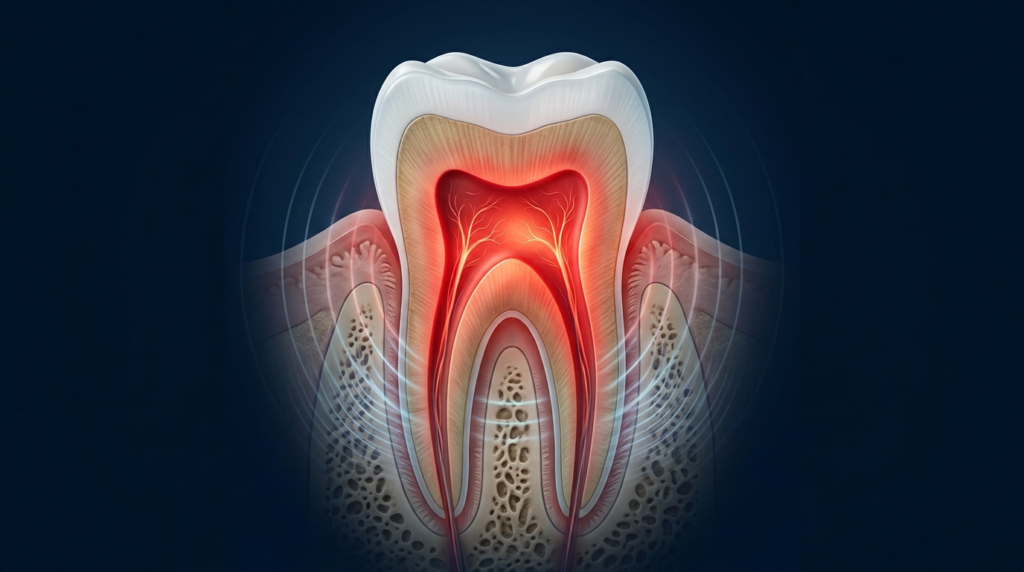
Use the pattern as your triage. Pain only when triggered by cold or sweet, settling in seconds, points to sensitivity or early decay; book a normal appointment. Pain that lingers minutes after a trigger, or arrives spontaneously in the evening, points to a deeply irritated nerve; book within days. Pain that wakes you from sleep, throbs in rhythm with your pulse, or needs painkillers to survive the night is the irreversible pulpitis pattern, and the honest news is that it does not calm down on its own; the choice ahead is usually root canal treatment to save the tooth or extraction to remove it, and earlier arrival keeps the first option open. If night pain comes with facial swelling, fever, or difficulty opening the mouth, that is no longer a wait-for-morning situation; it needs an emergency dentist. For everything short of that, get through tonight with the steps above and book the appointment in the morning while the resolve is fresh; the tooth that ruined last night has already told you it will not spare the next one.
Frequently Asked Questions
Why does my toothache get worse at night?
Lying down increases blood flow and pressure in the head, raising pressure inside the inflamed tooth, while the absence of daytime distractions makes the pain feel louder. Night grinding and late sweet or hot food add their own triggers.
How can I sleep with a toothache?
Sleep with your head raised on two pillows, take paracetamol or ibuprofen as the packet directs about 30 to 45 minutes before bed, apply a cold compress to the outside of the cheek, rinse with warm salt water, and avoid hot, cold or sweet food in the last hour.
Does toothache at night mean I need a root canal?
Not always, but spontaneous throbbing pain that wakes you from sleep is the classic sign of irreversibly inflamed nerve tissue, which typically ends in root canal treatment or extraction. The earlier the tooth is examined, the better the chance of saving it.
Is clove oil good for tooth pain at night?
It gives genuine but short-lived numbing. Use a drop on a small piece of cotton against the tooth, not undiluted oil flooding the area, which can burn the gum. Treat it as a bridge to sleep, not a treatment.
When is a night toothache an emergency?
When it comes with swelling of the face or jaw, fever, difficulty opening the mouth, swallowing or breathing. Those signs mean spreading infection and need same-day emergency care, not home remedies until morning.
