
Quick Answer
Once plaque hardens into tartar, no brushing, paste, or home remedy removes it; only professional scaling does. What you can genuinely do at home is stop new tartar from forming: brush twice daily along the gumline, clean between teeth, and use a tartar-control toothpaste, because plaque takes only about 24 to 72 hours to begin hardening. Home scraping kits, lemon, vinegar and baking-soda scrubbing are either useless against hardened tartar or actively damage enamel and gums. The honest sequence is: scaling once to reach zero, then home care to stay there.
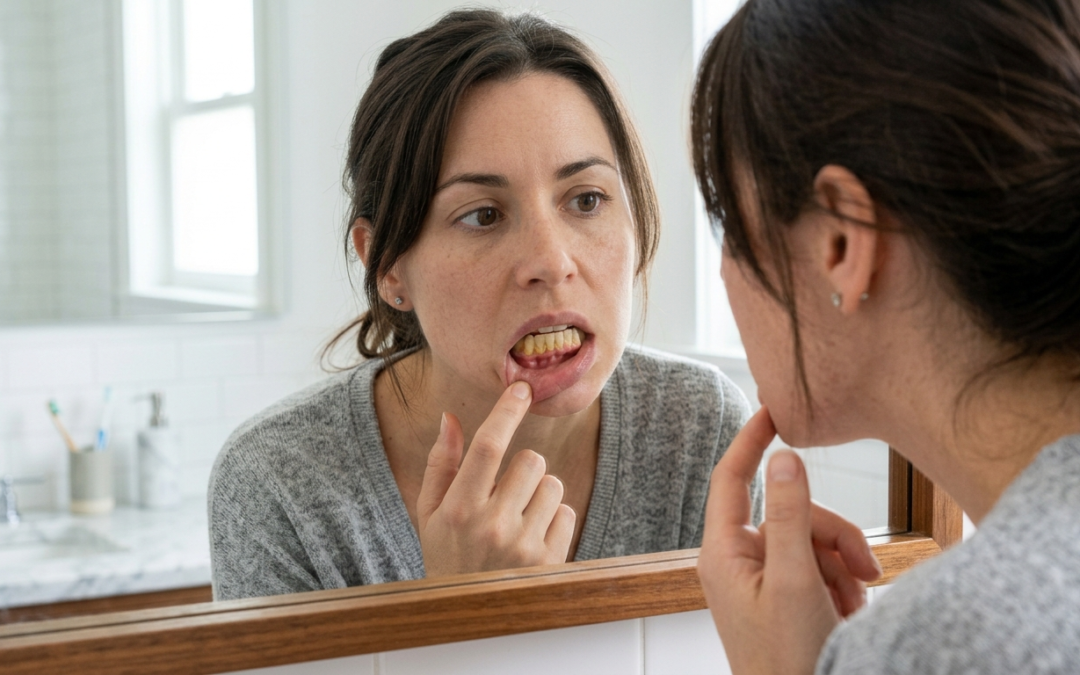
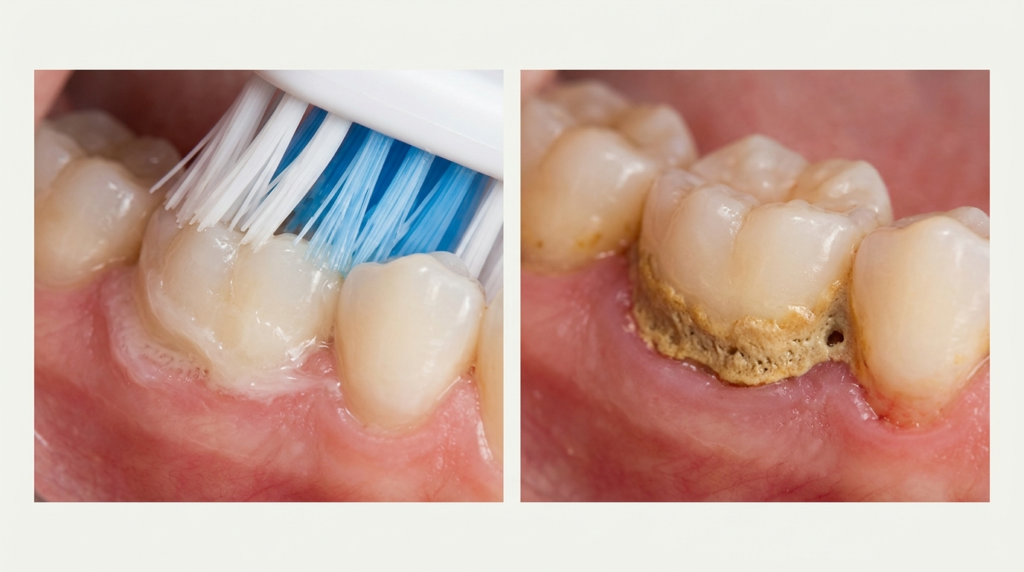
The yellow-brown crust that builds along the gumline, especially behind the lower front teeth, drives one of the most-searched dental questions in Pakistan, and the internet answers it with confident lies. So here is the truth up front, because everything else in this guide depends on it: plaque and tartar are two different materials, and only one of them is removable at home. Plaque is the soft, sticky bacterial film that forms on teeth every single day; a brush and floss wipe it away easily. But plaque that survives on the tooth begins absorbing minerals from your own saliva within about 24 to 72 hours, and mineralized plaque is tartar, also called calculus, a substance hard enough that dentists remove it with vibrating steel instruments. Asking toothpaste to remove tartar is asking a sponge to remove cement.
This distinction explains both why tartar feels so unfair and why the fix is so clean. Unfair, because people who brush daily still build tartar in the spots their brush misses, and the areas near saliva glands, behind the lower front teeth and beside the upper back teeth, mineralize fastest of all. Clean, because the problem splits perfectly into two jobs: a dentist’s scaling visit removes what has already hardened, and your daily routine, done slightly better than before, prevents the next layer. This guide is honest about which job belongs to whom, and blunt about the DIY methods that trade a cosmetic problem for a structural one.
Plaque vs Tartar: The 72-Hour Line
| Plaque | Tartar (calculus) |
What it is | Soft, sticky bacterial film | Plaque hardened by minerals from saliva |
Feel | Fuzzy coating, comes off with a fingernail | Rough, crusty, fixed in place |
Colour | Colourless to pale yellow | Yellow, brown, or black near the gumline |
Removable at home? | Yes, easily, with brush and floss | No; bonded to the tooth surface |
Time factor | Forms daily | Begins forming from plaque within 24 to 72 hours |
The 72-hour line is the entire strategy. Every patch of plaque you remove today is tartar that never gets to exist. Every patch you miss for three days joins the crust.
What Actually Works at Home (Prevention, Not Removal)
Brush twice daily for two minutes with the bristles angled 45 degrees into the gumline, because that junction is where tartar starts; scrubbing the middle of the teeth while skating over the gumline is how careful people still build calculus. Clean between teeth daily with floss or interdental brushes, since roughly a third of each tooth’s surface faces its neighbours where no brush reaches. Use a fluoride toothpaste labelled tartar control; the pyrophosphates in them genuinely slow plaque’s mineralization, though they do nothing to existing tartar. Give the lower front teeth’s inner surface five deliberate seconds every session; it sits beside a saliva gland and is the single fastest-crusting spot in the mouth. And drink water after meals; rinsing away food debris starves the plaque that would become tartar. Baking soda deserves one honest line: as an occasional gentle paste it helps remove plaque and surface stains slightly better than plain brushing, but it does not dissolve tartar, and daily aggressive scrubbing with it wears enamel.
The DIY Methods That Damage Teeth
Method | The claim | The reality |
Home scaling kits and metal scrapers | “Scrape it off like the dentist” | Gouged enamel, sliced gums, and tartar pushed under the gumline where it does the most damage |
Lemon juice or vinegar rubs | “Acid dissolves the crust” | Acid dissolves enamel first; tartar barely notices, teeth become sensitive |
Hard scrubbing with charcoal or salt | “Abrasion removes buildup” | Scratches enamel; tartar remains |
Walnut shell boiling and similar totkas | Folk removal recipes | No effect on mineralized calculus |
Whitening pastes against brown crust | “It’s just a stain” | Tartar is not a stain; no paste removes it |
The scraper kits deserve special warning because they look legitimate. A dentist scaling your teeth works with magnification, angled instruments and training in exactly how much force each surface tolerates; the same instrument in an untrained hand at a bathroom mirror slips, and the two common outcomes are a permanent groove in the enamel or a gum cut that heals into recession. Worse, partial home scraping leaves a rough, snagging surface that collects new plaque faster than the smooth tooth did.
When Scaling Is the Answer, and What It Involves
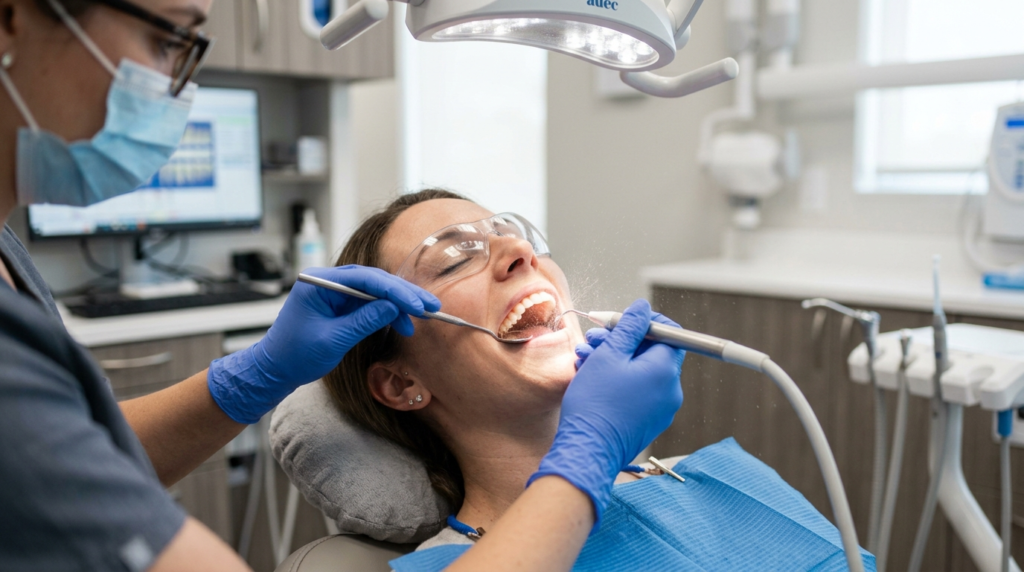
If you can see or feel the crust, the removal decision is already made; the only question is when. Professional scaling and polishing uses an ultrasonic tip that vibrates tartar off the tooth surface, above and just below the gumline, then smooths the surface so new plaque struggles to anchor, typically in a single 30 to 40 minute visit. Mild gum bleeding during scaling and a few days of temperature sensitivity afterwards are normal and settle; they are signs of gums recovering from inflammation, not damage. Two honest markers make the visit more urgent than cosmetic: tartar visibly darkening near or below the gumline, and gums that bleed when you brush, because both mean the buildup is now working on the bone and attachment around the teeth, the process that loosens teeth years later. Once scaled to zero, the home routine above genuinely keeps most mouths tartar-free with a maintenance cleaning every 6 to 12 months. If the crust is already visible, book a scaling appointment; it is one short visit that resets the problem completely, which no amount of home effort can do.
Frequently Asked Questions
Can I remove tartar from my teeth at home?
No. Once plaque mineralizes into tartar it is bonded to the tooth and only professional scaling removes it safely. Home care’s real power is prevention: removing plaque daily before it hardens, which takes as little as 24 to 72 hours.
Does baking soda remove tartar?
No. Baking soda helps remove soft plaque and mild surface stains, but it cannot dissolve or scrub off mineralized tartar. Aggressive daily scrubbing with it wears enamel while the tartar stays.
Are home tartar scraper kits safe?
No. Untrained scraping gouges enamel, cuts gums, and often pushes tartar below the gumline where it causes the most harm. The rough, half-scraped surface also collects new plaque faster than before.
Why do I get tartar even though I brush daily?
Usually the gumline and between-teeth surfaces are being missed, and areas near saliva glands, especially behind the lower front teeth, mineralize fastest. Angling bristles into the gumline and cleaning between teeth daily closes the gap.
How often should tartar be removed by a dentist?
Most people do well with scaling every 6 to 12 months once the mouth has been cleaned to zero. Heavy builders, smokers, and anyone with bleeding gums may need it more often; your dentist sets the interval after seeing the buildup rate.
