

Quick Answer
A sharp, short pain when sugar or cold touches a tooth means something has reached the dentine, the sensitive layer under the enamel, and the two commonest ways that happens are a cavity that has broken through the enamel and a gum that has receded to expose the root. Sweet sensitivity in particular points toward a cavity or a leaking filling, because sugar draws fluid through the tiny tubes in exposed dentine; cold sensitivity across several teeth points toward worn enamel or receding gums. Pain that lasts only seconds after the trigger is dentine sensitivity and is usually fixable at home and at a cleaning; pain that lingers for more than 10 to 15 seconds, or arrives on its own, means the nerve is inflamed and needs a dentist promptly.
The pain is unmistakable: a spoon of kheer, a cold Pepsi, a bite of mithai or even a breath of winter air through the mouth, and one tooth or a whole side of the mouth fires a sharp, electric jolt that fades almost as fast as it came. Most people in Pakistan call it “thanda garam lagna” and treat it as a nuisance to be managed with a sensitivity toothpaste, and for many it is exactly that. But the same sensation is also the earliest symptom of a cavity, a cracked tooth or a filling that has started to leak, and the difference between the harmless version and the warning version is not the intensity of the pain but what triggers it and how long it lasts. Understanding that difference is what this guide is for.
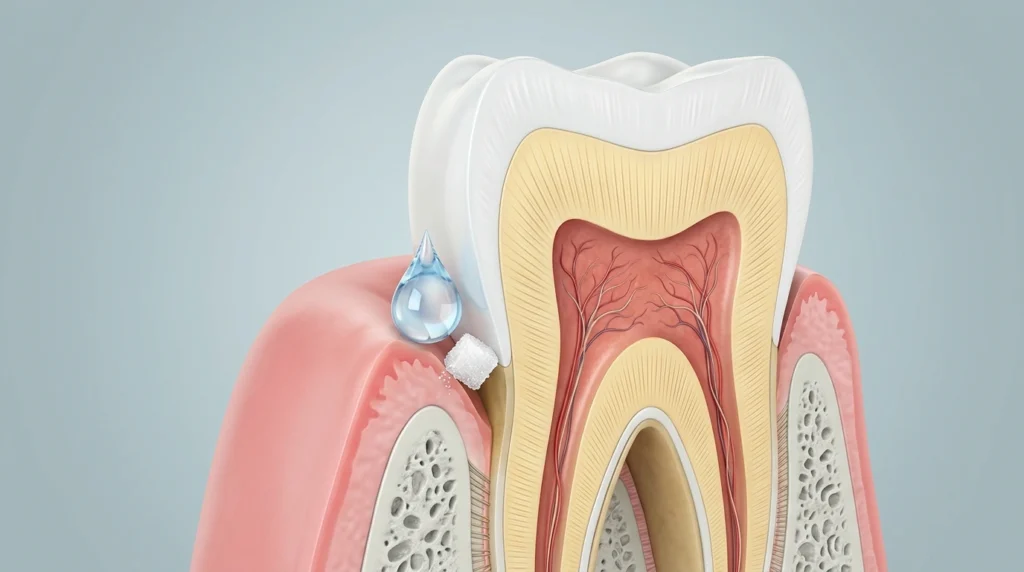
The mechanism is the same in every case. Enamel has no nerve endings, so a healthy tooth feels nothing from sugar or cold. Beneath it, dentine is riddled with thousands of microscopic tubules running from the surface toward the nerve, each filled with fluid. When enamel is worn away, when a cavity breaks through it, or when the gum shrinks back from the root, which has no enamel at all, those tubules are open to the mouth. Cold contracts the fluid, sugar pulls water out of it by osmosis, and either way the fluid shifts, tugs on the nerve fibres at the bottom of the tubule, and the brain registers a sharp pain. That is why the pain is so fast and so short: it is a fluid movement, not an infection. Sensitivity toothpastes work by plugging the tubules or numbing the nerve endings; fillings work by covering the opening; and neither works if the real problem is a nerve that is already inflamed, which is why the causes of tooth sensitivity have to be sorted before the remedy is chosen.
What the Type of Pain Tells You
| Pattern | Most likely cause | Urgency |
| Sharp, seconds long, with cold only, several teeth | Exposed dentine: receding gums or worn enamel | Low; home care and a checkup |
| Sharp, seconds long, with sweets, one tooth | Cavity, leaking or cracked filling, or decay under an old filling | Medium; see a dentist within a few weeks |
| Sharp with cold and sweet, one tooth, worsening | Deep cavity or exposed root on that tooth | Medium; sooner if it is spreading |
| Pain that lingers 10 to 30 seconds or more after the trigger | Inflamed nerve (pulpitis), often reversible if treated | High; see a dentist this week |
| Pain with hot drinks as well as cold | Nerve inflammation progressing | High; likely needs a root canal soon |
| Throbbing pain that starts on its own or wakes you at night | Irreversible pulpitis or early abscess | Urgent; root canal or extraction |
| Sharp pain on biting or releasing, not with cold or sweet | Cracked tooth or split filling | Medium to high; cracks worsen with chewing |
| Sensitivity after a new filling for 2 to 4 weeks | Normal settling | Low; should fade over weeks, not worsen |
The single most useful question is how long the pain lasts after the trigger is gone. Dentine sensitivity switches off within a few seconds because the fluid stops moving. Nerve inflammation does not; the pulp is enclosed in hard tooth with no room to swell, so once it is irritated it throbs for half a minute or more, and eventually it hurts without any trigger at all. Sweet sensitivity is the second useful clue, because healthy exposed root surfaces react far more to cold than to sugar, while a cavity reacts strongly to both. If mithai hurts one specific tooth and cold water hurts the same one, assume a cavity until a dentist says otherwise.
The Six Common Causes
| Cause | **How it exposes * dentine** | *What fixes it** |
| Receding gums | Root surface has no enamel; gum shrinks from hard brushing, gum disease or age | Softer brushing, sensitivity toothpaste, fluoride varnish; gum treatment if disease is the cause |
| Early cavity | Acid dissolves enamel, opening a path to dentine; sweets trigger it strongly | Filling; early white spots can be remineralized |
| Leaking or old filling | Gap forms between filling and tooth; decay starts underneath | Replace the filling |
| Enamel erosion | Cold drinks, lemon, vinegar, reflux, vomiting dissolve enamel evenly | Cut the acid source, fluoride, bonding if severe |
| Enamel wear (attrition and abrasion) | Grinding thins biting edges; hard brushing with a stiff brush scrubs a notch at the gumline | Night guard, gentler brushing, bonding |
| Cracked tooth | Hairline crack lets fluid and pressure reach dentine or pulp | Crown, sometimes root canal; found by a bite test and X-ray |
| Recent dental work | Cleaning, whitening or a new filling temporarily irritates the tubules | Usually settles in 2 to 4 weeks; sensitivity toothpaste helps |
Two of these are far more common in Pakistan than most people realise. Hard brushing with a firm-bristled brush, often side to side with force in the belief that it cleans better, is the leading cause of both receding gums and the wedge-shaped notches at the gumline that make the lower front teeth and upper canines ache with cold. And acid erosion from cold drinks, sipped through the day rather than finished with a meal, evenly strips enamel from the front teeth of teenagers and young adults, leaving them translucent at the edges and sensitive across the whole mouth. Both are habit problems before they are dental problems, and both keep coming back no matter how much sensitivity toothpaste is used until the habit changes. Gum recession that comes with bleeding, swelling or bad breath is gum disease rather than brushing, and needs professional gum treatment rather than a toothpaste.
What Actually Stops the Sensitivity at Home
| Measure | How it works | Realistic timeline |
| Sensitivity toothpaste (potassium nitrate, stannous fluoride or arginine) | Potassium nitrate calms the nerve fibres; stannous fluoride and arginine plug the tubules | 2 to 4 weeks of twice daily use; stops working within weeks if you stop |
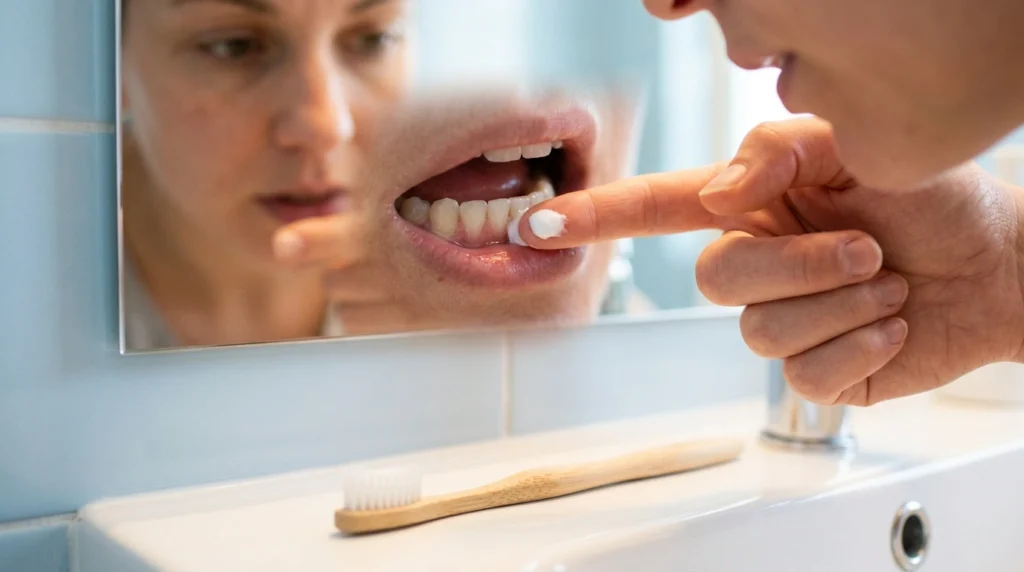
| Apply a pea of the paste directly to the sensitive spot at night and leave it | Concentrated contact without dilution | Adds to the twice daily brushing |
| Soft brush, gentle circles, no side-to-side scrubbing | Stops further gum recession and notching | Prevents worsening; does not undo damage |
| Fluoride toothpaste, spit do not rinse | Hardens exposed dentine and enamel | Ongoing |
| Limit acid to mealtimes, rinse with water after, wait 30 minutes before brushing | Fewer erosion attacks; enamel softened by acid is scrubbed off by immediate brushing | Ongoing; teeth stop getting worse within weeks |
| Straw for cold drinks | Bypasses the front teeth | Immediate |
| Avoid whitening toothpastes and charcoal | Their abrasives open more tubules | Immediate |
| Warm, not hot, drinks; room temperature water | Avoids the trigger while the tubules seal | Immediate relief; not a cure |
A sensitivity toothpaste is the right first step for cold sensitivity across several teeth with no visible cavity, and it needs a fair trial: most people give up after a week, but the potassium nitrate types take two to four weeks to build up in the nerve fibres, and the effect fades when they stop. Our comparison of the best toothpastes for sensitive teeth in Pakistan explains which active ingredient suits which cause. What a toothpaste cannot do is fix a cavity, seal a leaking filling or calm an inflamed nerve, and the common mistake is to keep buying tubes for a single sweet-sensitive tooth that is quietly decaying. The rule of thumb: if the sensitivity is to cold, across several teeth, and improves within a month of toothpaste and gentler brushing, home care is working; if it is to sweets, on one tooth, or not improving after a month, stop and book a checkup.
What a Dentist Can Do
For exposed root surfaces that do not settle with toothpaste, a dentist can paint fluoride varnish or a desensitising agent onto the area, which seals the tubules for months rather than weeks; where a notch has formed at the gumline, a small tooth-coloured filling covers it permanently. Cavities are cleaned and filled, and a leaking filling is replaced before the decay beneath it reaches the nerve; the earlier that happens, the smaller the filling and the less sensitive the tooth afterward. A cracked tooth, which hurts on biting rather than with cold, is confirmed with a bite test and usually protected with a crown before the crack reaches the pulp. Enamel worn thin by grinding is protected by a night guard and rebuilt with bonding. And when the pain has crossed into lingering, spontaneous or night pain, the nerve is inflamed beyond recovery and a root canal saves the tooth; delaying at that stage only trades a root canal for an extraction. Most sensitivity is sorted in one visit, and the visit is also the only way to find out which of the six causes you actually have, because they feel identical from the inside.
When Sensitivity Is an Emergency
Sweet or cold sensitivity on its own is not an emergency. It becomes one when the pain lingers for more than a minute after the trigger, when it starts without any trigger, when it wakes you at night or throbs when you lie down, when hot drinks begin to hurt as much as cold, when there is swelling of the gum or face, a bad taste, or a pimple-like boil on the gum near the tooth, or when biting down produces a sharp stab. Each of those means infection or nerve damage rather than exposed dentine, and each moves the timeline from “book a checkup this month” to “see a dentist this week, or today if there is swelling.” Pain that suddenly stops after weeks of worsening is not good news; it usually means the nerve has died and an abscess is forming quietly. Our guide to toothache at night explains why nerve pain worsens when you lie down and how to get through the night before the appointment.
Frequently Asked Questions
Why do my teeth hurt when I eat sweets?
Sugar draws fluid out of the tiny tubules in exposed dentine, which tugs on the nerve and causes a sharp, short pain. Sweet sensitivity on one tooth most often means a cavity, a leaking filling or decay under an old filling, and needs a dentist to check; it is less typical of simple gum recession, which reacts mainly to cold.
Why are my teeth sensitive to cold but not hot?
Cold sensitivity that lasts only seconds is classic exposed dentine from receding gums or worn enamel, and the nerve is healthy. When hot drinks also begin to hurt, or the pain lingers, the nerve itself is becoming inflamed, and that needs prompt dental treatment rather than toothpaste.
Is tooth sensitivity to sugar a sign of a cavity?
Often, yes. A cavity that has broken through enamel reacts sharply to sweets and cold on one specific tooth. Not every sweet-sensitive tooth has a cavity, but it is the most common cause, and the only way to rule it out is a dental examination, usually with an X-ray.
How do I stop my teeth from hurting when I eat cold things?
Switch to a sensitivity toothpaste twice daily for at least four weeks, brush gently with a soft brush in small circles, use a fluoride toothpaste and do not rinse after brushing, limit acidic drinks to mealtimes and use a straw. If several teeth are affected and there is no visible cavity, this usually works; if one tooth is affected or it does not improve, see a dentist.
When should I see a dentist for sensitive teeth?
See a dentist if the sensitivity is on one tooth, triggered by sweets, not improving after a month of home care, or if the pain lingers more than a few seconds, comes on its own, wakes you at night, or involves hot drinks, swelling or pain on biting. Those signs point to a cavity, crack or inflamed nerve that toothpaste cannot fix.
