
Quick Answer
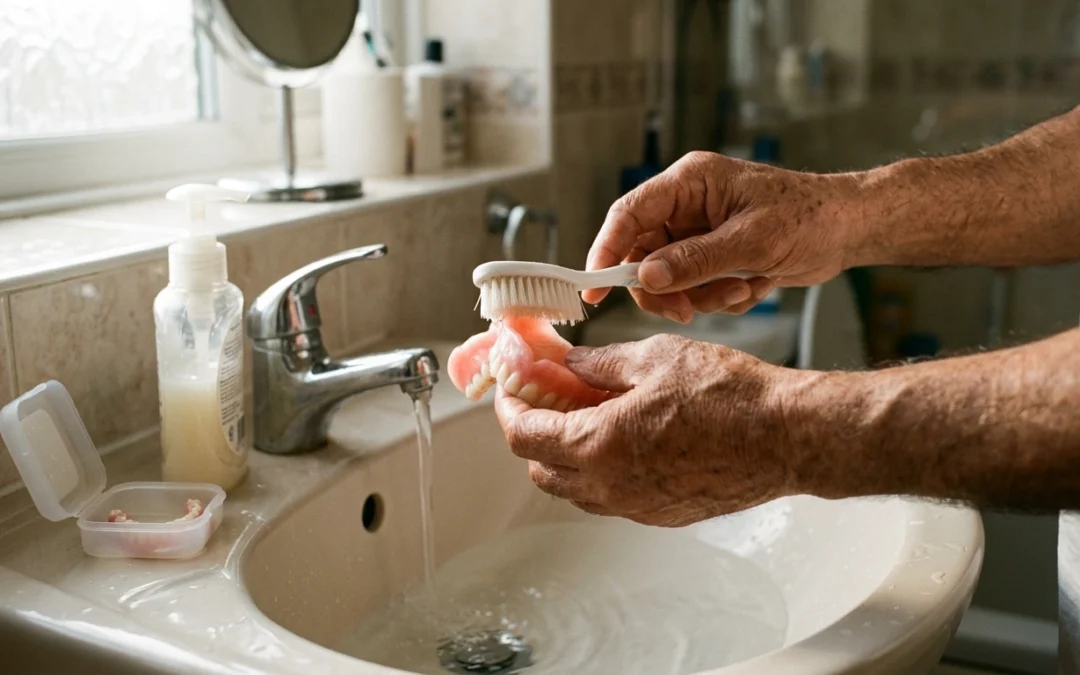
Take dentures out after every meal and rinse them, brush them once a day with a soft denture brush and mild soap or a denture paste, never ordinary toothpaste, over a basin of water or a folded towel so a drop does not crack them, and soak them overnight in cool water or a denture-cleaning solution while you sleep without them in. Never use hot water, bleach or a hard brush, never wear them 24 hours a day, and brush your gums, tongue and any remaining natural teeth every day as well. Well-cared-for dentures typically last 5 to 10 years, but the jaw beneath them keeps shrinking, so they need checking every year and usually a reline every 1 to 2 years; a denture that has become loose, rubs, or smells is telling you it needs the dentist, not more adhesive.
Dentures are the most common replacement for missing teeth in Pakistan and the least well looked after. Most people who wear them were given a set and sent home with, at best, a sentence of advice, and so the same habits appear in almost every household: the denture is worn day and night for years, scrubbed with a toothbrush and toothpaste until the surface is scratched and stained, dropped into a glass of hot water “to kill germs,” and kept in service long after it has stopped fitting, held in with ever-thicker layers of adhesive. The result is sore, red gums, fungal infections at the corners of the mouth, a permanent smell that the wearer cannot detect and the family is too polite to mention, and a jaw that shrinks faster than it needed to.
None of this is inevitable. A denture, whether full or partial, is a precision appliance made of acrylic and sometimes metal, and it lasts and stays comfortable for as long as it is cleaned properly, rested nightly and refitted as the mouth changes. This guide sets out the daily routine, the things that damage dentures and why, the common problems of soreness, looseness and smell and what each one means, how to care for the mouth beneath the denture, and how long dentures realistically last before they need relining or replacing. The daily rules here follow the evidence-based guidelines for complete denture care published by the American College of Prosthodontists. For anyone still deciding between dentures, bridges and implants, our guide to missing teeth treatment sets out the options.
The Daily Routine
When | What to do | Why |
After every meal | Remove and rinse under running cool water to clear food | Food trapped under the plate causes soreness and smell within hours |
Once a day, ideally at night | Brush all surfaces with a soft denture brush and liquid hand soap, dish soap or a denture paste; brush the fitting surface especially | Removes the plaque film that hardens into tartar and harbours fungus |
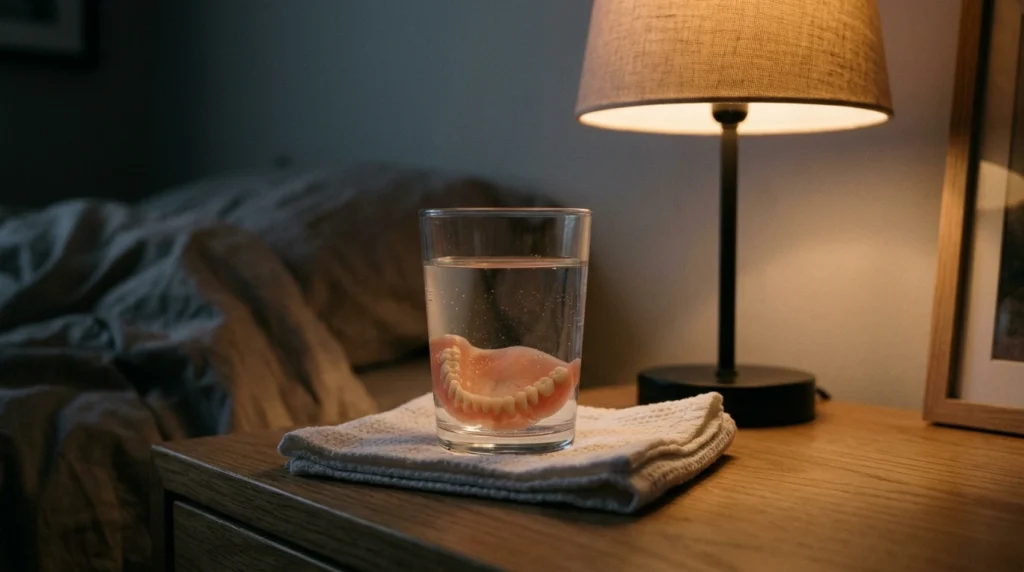
Every night | Take them out and soak in cool water or a denture-cleaning tablet solution for at least 6 hours | Gums need to rest and recover blood flow; acrylic must stay wet or it warps |
Every night, after removing | Brush gums, palate and tongue with a soft toothbrush; brush any natural teeth with fluoride toothpaste | The mouth under the denture collects plaque too; natural teeth next to a partial decay fastest |
Every morning | Rinse the denture thoroughly before inserting; rinse the mouth | Removes soaking solution, which can irritate |
Once a week | Soak in a denture-cleaning tablet if you normally use plain water; check for cracks, rough edges or a loose tooth | Weekly deep clean and inspection |
Once a year | Professional cleaning of the denture (ultrasonic) and an examination of the mouth at the dentist | Recommended by the American College of Prosthodontists |
Always | Clean over a basin of water or a folded towel | Dentures crack if dropped on a hard sink |
The night-time rule is the one most often ignored and the one with the most consequences. The gums under a denture are living tissue that needs a rest from pressure, and the acrylic surface, however clean it looks, carries a film of bacteria and Candida yeast against the palate all day. Worn round the clock, that combination produces denture stomatitis, a red, sometimes sore inflammation of the whole palate that is present in a large proportion of people who never remove their dentures, along with the cracked, sore corners of the mouth that so many older Pakistani denture wearers accept as normal. Six hours out overnight is enough to prevent it.
What Damages Dentures
Habit | What it does | Do instead |
Ordinary toothpaste | Abrasives scratch the acrylic; scratches hold stain and bacteria and make the plate look grey and rough within months | Liquid soap, dish soap or a denture paste |
Hard toothbrush or scrubbing | Wears the surface and the fitting edge, loosening the fit | Soft denture brush, gentle strokes |
Hot or boiling water | Warps the acrylic permanently; the denture will never fit again | Cool or lukewarm water only |
Household bleach soaks longer than 10 minutes, Dettol, vinegar | The American College of Prosthodontists warns that bleach (sodium hypochlorite) soaks beyond 10 minutes damage the acrylic and corrode metal clasps; strong acids etch the surface | Denture-cleaning tablets or diluted soap; if a dentist advises a brief dilute bleach soak, keep it under 10 minutes and never with metal parts |
Letting them dry out | Acrylic shrinks and distorts | Always store in water when out of the mouth |
Sleeping in them | Denture stomatitis, fungal infection, faster bone loss, bad breath | Out every night |
Wrapping in tissue when out | Thrown away by accident; dries out | Dedicated denture box with water |
Using adhesive to hold a loose denture | Masks a fit problem; the jaw keeps shrinking under an ill-fitting plate | See the dentist for a reline |
Home repair with superglue or nail glue | Toxic, and the joint is never in the right position; usually ruins the denture | Dentist or dental technician repair |
Chewing hard things: ice, bones, hard nuts, sugarcane | Cracks the plate or breaks a tooth off | Cut food small; chew on both sides at once |
Whitening products or baking soda | Do not whiten denture teeth, which are plastic; abrade the surface | Professional clean at the dentist |
The toothpaste habit is the most common and the hardest to break, because it feels like the obvious thing to use. Toothpaste is designed for enamel, which is far harder than denture acrylic; on a denture it acts like fine sandpaper, and a plate brushed with toothpaste for a year looks visibly duller and holds stain and smell far more than one cleaned with soap. If a denture has already become stained, brown from chai and paan or grey from scratches, the dentist can clean and polish it in a few minutes, and after that soap and a soft brush keep it that way.
Sore Spots, Looseness and Smell
Problem | Likely cause | What to do |
A specific sore spot or ulcer where the denture edge sits | High spot or sharp edge on a new denture; or a denture that has shifted as the jaw shrank | Do not file it yourself; the dentist adjusts it in minutes. Leave the denture out as much as possible until then; warm salt water rinses |
Whole gum sore, red palate | Denture stomatitis from wearing it 24 hours; poor cleaning; fungal infection | Out at night, thorough cleaning, antifungal treatment from the dentist if needed |
Cracked, sore corners of the mouth | Fungal infection linked to a worn, over-closed denture that lets the corners fold | Denture check; the bite height often needs restoring |
Denture loose, drops when talking, food under it | Jaw bone shrinking (normal, ongoing), worn fitting surface, or a warped plate | Reline or rebase at the dentist; adhesive is a short-term bridge, not a fix |
Clicking when eating or speaking | Loose fit, or the bite set too high | Adjustment or reline |
Persistent smell from the denture | Plaque and fungus in scratches and pores; not soaking; food under the plate | Daily soap brushing, nightly tablet soak, professional clean; replace if the acrylic is badly porous |
Bad breath even with a clean denture | Coating on the tongue and palate, gum disease around remaining teeth, dry mouth | Brush the tongue and gums; see our guide to bad breath causes and treatment |
Gagging | Upper plate extends too far back, or is loose | Adjustment; usually settles with wear |
Burning tongue or palate | Allergy to acrylic (rare), fungal infection, or dry mouth | Dentist assessment |
Difficulty eating after weeks | Teeth worn flat, bite collapsed | Replacement is due |
A sore spot on a new denture is normal for the first week or two and is fixed by a small adjustment; a sore spot that appears on a denture you have worn comfortably for years is a sign that the jaw has shrunk beneath it and the plate is now pressing where it should not. The correct response to either is the dentist, not a nail file, and not a thicker layer of adhesive. Adhesive has a legitimate place, for confidence at a wedding or a speech, but a denture that needs adhesive every day to stay in has stopped fitting, and wearing an ill-fitting plate speeds up the bone loss that made it loose in the first place.
Looking After the Mouth Underneath
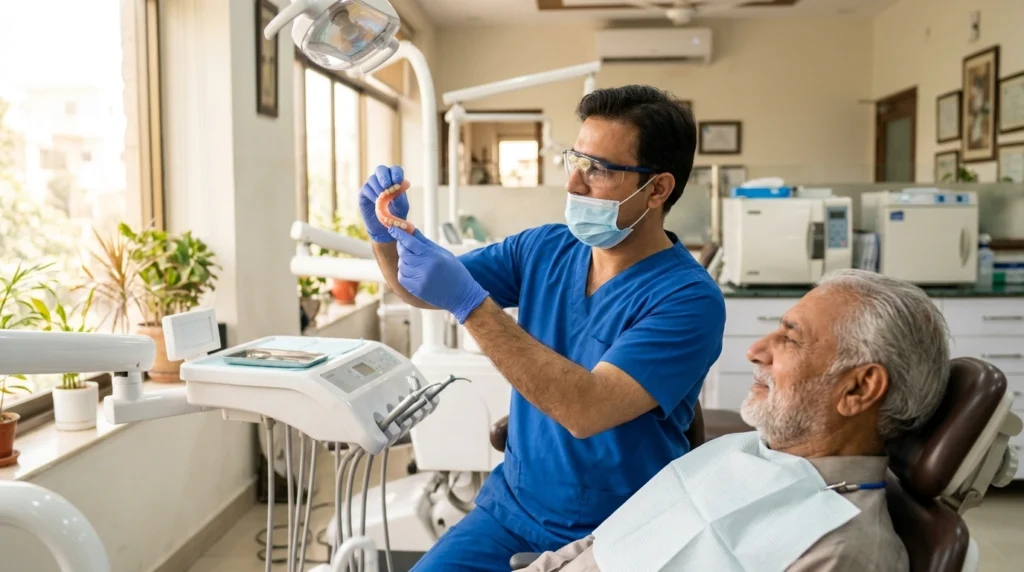
The mouth under a denture needs as much care as the denture. Every night, after taking the plate out, brush the gums, the roof of the mouth and the tongue gently with a soft toothbrush, or wipe them with a clean damp cloth, to remove the plaque and food film and to stimulate circulation in the gum. Rinse with warm salt water if the gums are tender. Anyone with a partial denture must brush the remaining natural teeth with fluoride toothpaste twice a day and clean around the clasps, because the teeth that the clasps grip are the ones that decay and loosen first; a partial denture wearer who neglects them loses those teeth within a few years and graduates to a full denture that could have been avoided. Once a year, whether or not anything hurts, the dentist should examine the mouth as well as the denture: the soft tissues under a plate are where oral cancers and fungal infections hide, and a denture wearer who is never examined is never screened.
How Long Dentures Last
A well-made full or partial denture that is cleaned properly and rested at night typically lasts 5 to 10 years, often around 5 to 7 in practice, but the mouth it was made for does not stay the same. Once teeth are lost, the jaw bone that held them shrinks steadily, faster in the first year and then more slowly for life, and a denture that fitted perfectly at delivery is measurably loose within one to two years. A reline, in which the dentist adds new acrylic to the fitting surface so it sits snugly on the changed ridge, restores the fit and is needed roughly every 1 to 2 years; it is far cheaper than a new denture and extends its life. Replacement is due when the teeth have worn flat and chewing is poor, when the plate has been relined several times, when it has cracked and been repaired, or when the face looks collapsed around the mouth because the bite has dropped. People who wear dentures for decades often end up with so little jaw bone that a new lower denture cannot grip at all, which is the reason dentists now suggest two or four implants to anchor a lower denture early rather than late. Our guides to how long dental implants last and to artificial teeth prices in Pakistan set out that comparison, and if your current denture is loose, sore or older than five years, the sensible next step is a fitting check, which you can arrange by booking an appointment with our prosthodontic team.
Frequently Asked Questions
How do I clean my dentures at home?
Rinse after every meal, brush once a day with a soft denture brush and liquid soap or denture paste, never toothpaste, and soak overnight in cool water or a denture-cleaning solution. Clean over a basin of water so a dropped denture does not crack. Brush your gums, tongue and any natural teeth daily too.
Can I use toothpaste on false teeth?
No. Toothpaste is abrasive and scratches denture acrylic, which then holds stain, bacteria and smell and looks dull within months. Use mild liquid soap, dish soap or a paste made for dentures, and have the dentist polish a denture that is already scratched.
Should I sleep with my dentures in?
No. Take them out every night for at least 6 hours and store them in water. Wearing dentures round the clock causes a red sore palate, fungal infection at the corners of the mouth, bad breath and faster jaw bone loss. Nightly removal is the single most important habit in denture care.
Why do my dentures keep getting loose?
Because the jaw bone shrinks steadily after teeth are lost, and the denture, which does not change, stops matching the ridge. This is normal and expected within 1 to 2 years of any denture. The fix is a reline by the dentist; daily adhesive hides the problem while the ill fit speeds up the bone loss.
How long do dentures last before they need replacing?
Typically 5 to 10 years, often around 5 to 7 in practice, for a well-cared-for denture, with a reline every 1 to 2 years to keep it fitting. Replace when the teeth are worn flat, the plate has cracked or been relined repeatedly, the bite has dropped so the face looks collapsed, or it can no longer be made to fit with a reline.
