

🦷 Quick Answer
The painful phase after a tooth extraction lasts 2 to 3 days, the gum closes over the socket in 1 to 2 weeks, and the bone underneath fills in over 2 to 3 months. Simple extractions heal faster; surgical and wisdom tooth removals sit at the longer end. Pain that suddenly worsens on day 2 to 4 with a bad taste is the classic sign of dry socket and needs a dentist, not more painkillers.
Everyone leaving the dental chair asks the same question in different words: when will this feel normal again? The honest answer is that healing happens in layers, and each layer has its own clock. The blood clot that forms in the first hours is the foundation of everything; the soft gum tissue closes over it within a couple of weeks; and the bone quietly rebuilds underneath for months after you have forgotten the whole event. Most problems people experience are not slow healing at all; they are the clot being disturbed in the first 72 hours by rinsing, spitting, smoking or poking the site.
Timelines also differ by extraction type. A loose, single rooted tooth removed in minutes behaves very differently from an impacted wisdom tooth that needed sectioning and stitches. This guide lays out the realistic day by day picture, the difference between normal soreness and trouble, and what genuinely speeds healing. What you eat matters more than most people expect in the first week, and we have covered that in detail in our guide on what to eat after a tooth extraction.
The Healing Timeline, Day by Day
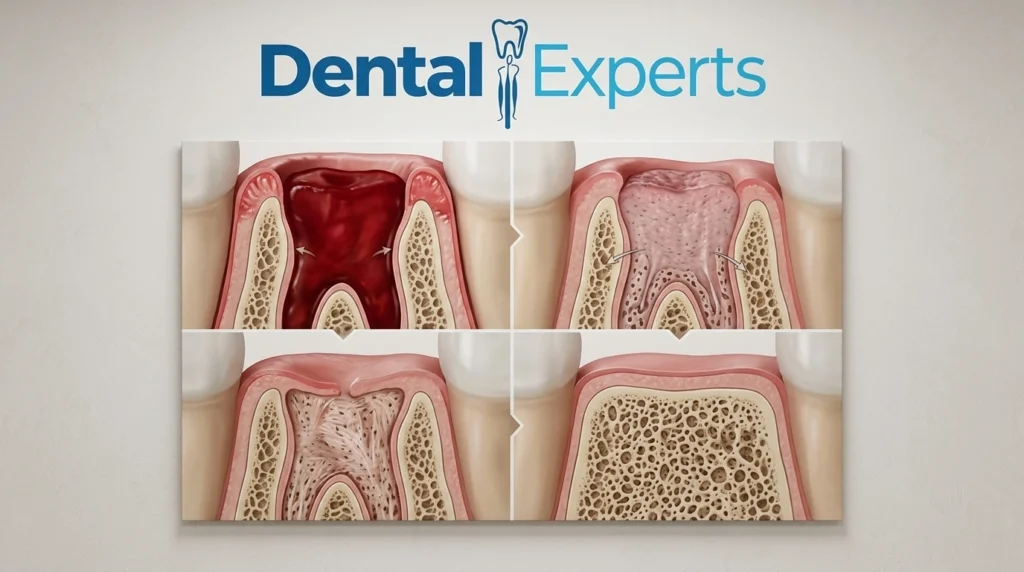
| Stage | What is happening | What is normal |
| First 24 hours | Blood clot forms in the socket | Oozing, swelling starting, dull ache as anesthesia fades |
| Day 2 to 3 | Peak of swelling and soreness | Discomfort controlled by prescribed painkillers, slight bruising |
| Day 4 to 7 | Gum tissue starts covering the socket | Pain fading daily, whitish tissue over the site (this is healing, not infection) |
| Week 2 | Soft tissue mostly closed | Site feels tender to touch but daily life is normal, stitches removed or dissolving |
| Week 3 to 4 | Socket visibly filling | Small dent remains, food no longer traps easily |
| Month 2 to 3 | Bone fills the socket | Site feels solid; implant planning becomes possible |
The single most useful rule: pain should trend downward every day after day 3. Improving, then suddenly worse, is the pattern that needs attention.
Simple vs Surgical: Why Your Neighbor Healed Faster
| Factor | Effect on healing |
| Simple extraction of a loose tooth | Fastest recovery, often near normal in 3 to 4 days |
| Surgical or impacted wisdom tooth removal | Add 3 to 7 days of swelling and jaw stiffness |
| Smoking or naswar | The biggest single delayer; multiplies dry socket risk several times |
| Uncontrolled diabetes | Slower tissue healing and higher infection risk; keep sugar controlled that week |
| Lower back teeth | Heal slower than upper front teeth due to denser bone and more chewing traffic |
| Age | Younger patients close sockets noticeably faster |
Dry Socket: The Complication Worth Knowing About
Dry socket happens when the blood clot dissolves or dislodges before the gum has closed, leaving bone exposed to air and food. It announces itself on day 2 to 4 with throbbing pain that radiates to the ear, a bad taste or smell, and an empty looking socket, and it affects roughly 2 to 5 percent of extractions, more after lower wisdom teeth and far more in smokers. It is not dangerous, but it is genuinely painful and does not respond well to ordinary painkillers. The fix is simple and fast: the dentist cleans the socket and places a medicated dressing, with relief typically within hours. If your pain curve suddenly reverses, do not wait it out at home; an emergency visit settles it the same day.
What Actually Speeds Healing

The first 72 hours decide most of the outcome. Bite firmly on the gauze for the first hour, then leave the site alone: no spitting, no straws, no rinsing on day one, and absolutely no smoking for at least 72 hours. From day two, rinse gently with warm salt water after meals. Sleep with your head slightly raised, use a cold compress in the first 24 hours for swelling, and keep brushing every other tooth normally. Eat soft, lukewarm food and chew on the opposite side. Take the full antibiotic course if one was prescribed; stopping early because you feel fine is how quiet infections start. Fever, swelling that grows after day 3, pus, or difficulty opening the mouth are signs to book a review appointment promptly rather than waiting for the routine follow up.
Frequently Asked Questions
How long does the pain last after a tooth extraction?
Meaningful pain lasts 2 to 3 days and should fade daily after that. Mild tenderness when touching the area can linger for a couple of weeks and is normal.
How long until the hole closes after extraction?
The gum closes over the socket in 1 to 2 weeks. The dent fills gradually over 1 to 3 months as bone rebuilds underneath. A small depression for a few weeks is normal.
What is the white stuff in my extraction site?
Whitish or creamy tissue over the socket after a few days is granulation tissue, a normal part of healing. It becomes a concern only with worsening pain, bad smell or pus.
When can I eat normally after a tooth extraction?
Soft foods for the first 3 to 4 days, then step up gradually. Most people chew normally on the extraction side by 1 to 2 weeks, later for surgical wisdom tooth removals.
How do I know if I have dry socket?
Pain that improves and then sharply worsens on day 2 to 4, radiating toward the ear, with a bad taste and an empty looking socket. It needs a dentist visit for a medicated dressing; home painkillers barely touch it.
