
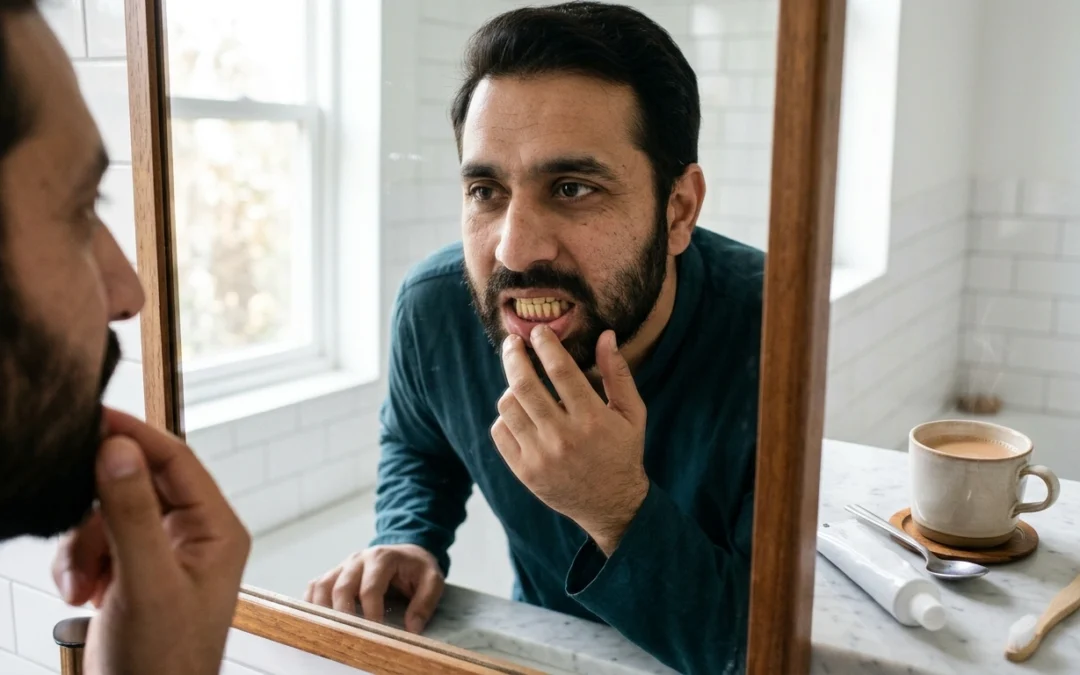
Quick Answer
Yellow teeth come from two different places, and the fix depends on which one you have. Surface (extrinsic) stains from chai, coffee, paan, naswar, smoking and plaque sit on the outside of the enamel and can be removed: a professional scaling and polishing clears years of them in one visit, and a whitening toothpaste or careful brushing slows their return. Deep (intrinsic) yellowness, where the enamel has thinned with age or acid and the naturally yellow dentine shows through, cannot be scrubbed off by any toothpaste or home remedy; it responds only to professional bleaching, and if the enamel is badly worn, to veneers or bonding. Lemon, baking soda, charcoal and salt do not whiten deep yellowness and wear away the enamel that hides it, making teeth yellower over time.
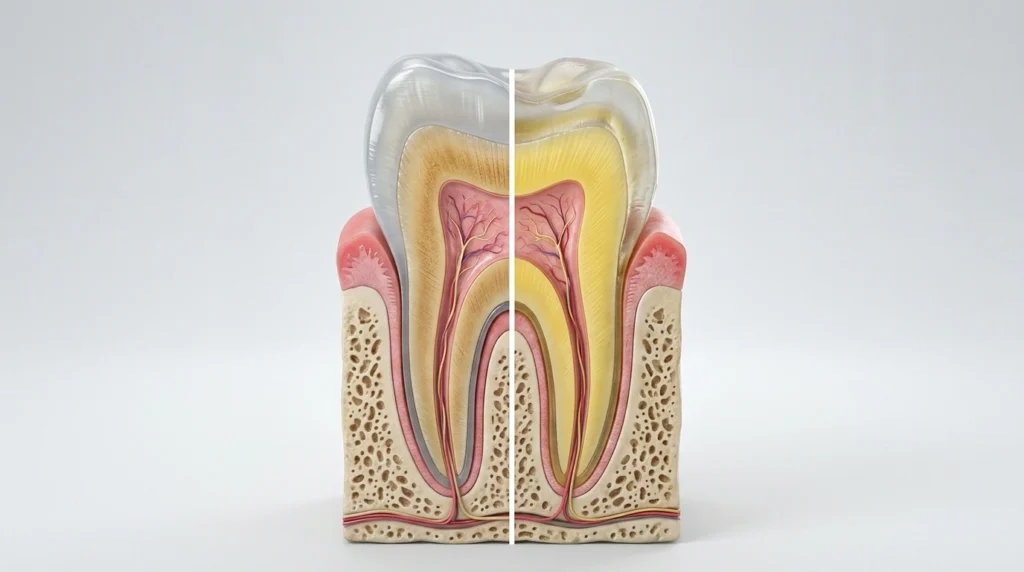
The frustration behind this question is usually the same: you brush twice a day, you may have tried a whitening toothpaste, and your teeth are still yellow, so you assume you are doing something wrong. Most of the time you are not. Teeth are not naturally white. Enamel, the outer layer, is translucent and slightly blue-grey; the dentine underneath it is naturally yellow, and the colour you see is the dentine filtered through the enamel. Thick, healthy enamel gives a pale, slightly off-white tooth; thin enamel lets more of the yellow through. That means two people with identical brushing habits can have very different tooth colour simply because of the enamel they were born with, and it means the yellowness of age, when enamel has thinned over decades, is not dirt and cannot be cleaned away.
Sitting on top of that natural colour is the layer that actually is dirt: pigment from food and drink, tar from smoking, the deep red-brown of paan and the plaque and tartar that trap all of it. This layer is what most Pakistani adults are seeing when they complain of yellow teeth, and it is genuinely removable. The whole art of getting rid of yellow teeth is working out how much of your colour is the removable layer and how much is the tooth itself, then treating each with the method that works on it. This guide explains the causes, how to tell them apart in a mirror, what home methods are safe and what they can realistically achieve, and which professional teeth whitening options fix what home care cannot.
Why Teeth Turn Yellow: Surface Stains vs Deep Colour
Cause | Type | Can it be removed? |
Chai, coffee, cola, red wine, soy and dark sauces | Surface stain | Yes: scaling and polishing; whitening toothpaste slows return |
Smoking, sheesha, naswar | Surface stain, heavy; tar and nicotine | Yes, though heavy smokers’ stains re-form within months |
Paan, gutka, chaliya | Surface stain, very heavy red-brown; also stains gums | Yes with scaling; the underlying gum and mucosa damage is the bigger concern |
Plaque and tartar | Surface; yellow-brown deposits at the gumline | Yes: scaling removes tartar completely |
Poor brushing technique | Surface; plaque left in the same spots daily | Yes: technique plus a cleaning |
Ageing | Deep; enamel thins and dentine shows through | No by cleaning; bleaching lightens it |
Acid erosion (cold drinks, lemon, vinegar, reflux, vomiting) | Deep; enamel worn thin, often with sensitivity | No by cleaning; bleaching or veneers |
Teeth grinding | Deep; enamel worn off biting edges, yellow dentine exposed | No by cleaning; bonding or veneers |
Childhood antibiotics (tetracycline), high fluoride | Deep; grey-yellow bands in the enamel itself | No by cleaning; bleaching helps partly, veneers fully |
Trauma to a single tooth | Deep; one tooth darker, nerve damaged | Root canal and internal bleaching or a crown |
Genetics | Deep; naturally thin or yellow-tinted enamel | Bleaching lightens; not a health problem |
The pattern to notice is that everything in the first half of the table sits on the tooth and everything in the second half is the tooth. Surface stains are darkest where plaque collects: along the gumline, between the teeth, and on the back of the lower front teeth. Deep colour is even across the whole tooth and often worse at the biting edges where enamel is thinnest. Paan and naswar deserve their own mention because they are the heaviest surface stainers in Pakistan by a wide margin, and because the red-brown stain they leave on teeth is the least of the damage they do; anyone who chews them regularly should read our guide to oral cancer symptoms as well as this one.
How to Tell Which Type You Have
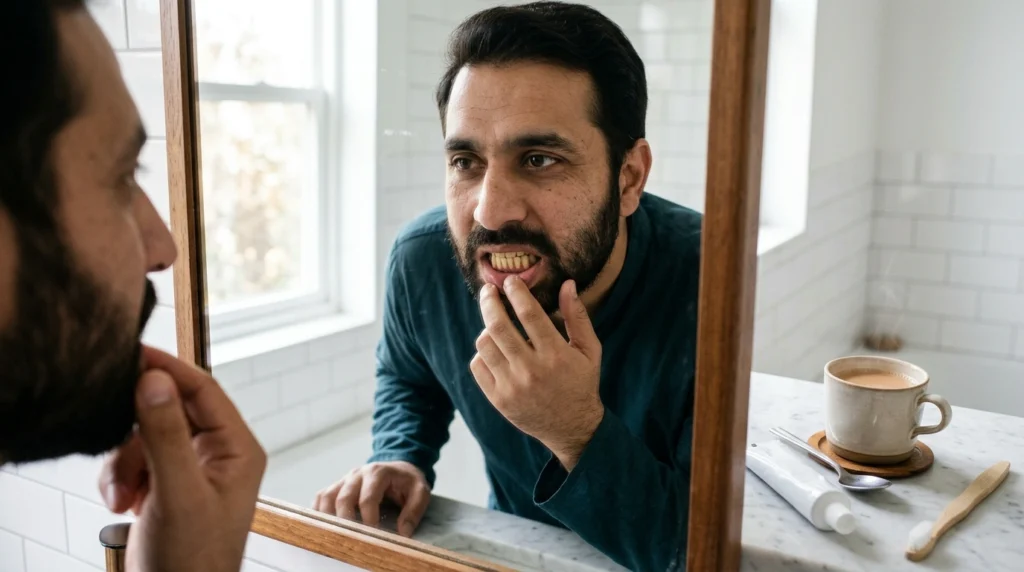
Stand in daylight, not bathroom light, and look closely. Surface staining is uneven: it is worst near the gums and between teeth, it is usually brownish rather than pure yellow, and it often comes with rough, hard deposits you can feel with your tongue along the inside of the lower front teeth, which is tartar. If you scrape a front tooth gently with a clean fingernail and a thin film comes away, you are looking at plaque and stain. Deep colour is even, smooth, and follows the shape of the tooth: the biting edges and the middle of the tooth are often more yellow or translucent than the area near the gum, and the teeth may be sensitive to cold, which suggests thin enamel. A single tooth that is darker than its neighbours is almost always a deep problem, usually a dead or dying nerve after an old knock, and needs a dentist rather than a toothpaste. Most people have both types at once, which is why the honest plan is usually a professional cleaning first, to remove everything removable, then a decision about bleaching based on the colour that remains.
What Works at Home
Method | Effect on surface stains | Effect on deep colour |
Brushing twice daily, 2 minutes, soft brush, fluoride toothpaste | Prevents new stain and plaque; removes fresh stain | None |
Whitening toothpaste (mild abrasive plus stain removers) | Lifts light surface stain over weeks; maintains a cleaning | Almost none; a shade at most |
Electric toothbrush | More consistent plaque removal than most manual brushing | None |
Flossing or interdental brushes daily | Removes stain between teeth where brushes miss | None |
Rinsing with water after chai, coffee, cola | Reduces new stain from each cup | None |
Drinking through a straw (cold drinks) | Bypasses front teeth for cold drinks | None |
Sugar-free gum after meals | Stimulates saliva, which clears pigment and acid | None |
Stopping smoking, paan, naswar | Stops the heaviest stain at its source | None, but stops further enamel damage |
Over-the-counter whitening strips (low peroxide) | Lightens by 1 to 2 shades over 2 weeks | Modest lightening over 2 weeks; sensitivity common |
The realistic expectation from home care is this: it keeps a professionally cleaned mouth from re-staining, and it can lift a light layer of fresh stain, but it will not remove years of accumulated tartar and pigment, and it cannot change the colour of the tooth itself. A whitening toothpaste used for a month on teeth that are yellow because of thin enamel will produce no visible change, and that is not a defective toothpaste; it is the wrong tool. Over-the-counter whitening strips sold in Pakistani pharmacies contain a low concentration of peroxide and do lighten teeth a shade or two, including deep colour, but they cause sensitivity in many users, they do not fit the teeth well, and they should not be used by anyone with untreated cavities, cracked teeth or gum disease, because the peroxide reaches the nerve through those openings. Our guide on how to whiten teeth at home safely goes through each product and method in detail.
What Does Not Work, and Damages Enamel
Lemon juice, baking soda paste, activated charcoal, salt scrubs, strawberry mash and hydrogen peroxide rinses are the five most searched yellow-teeth remedies in Pakistan and all five do the same thing: they either dissolve enamel with acid or grind it with abrasive, which briefly makes the surface look cleaner and permanently makes it thinner. Thinner enamel lets more dentine colour through, so the teeth end up more yellow, more sensitive and more prone to decay than before. Lemon is the worst offender because citric acid softens enamel within minutes and brushing afterwards scrubs the softened layer away. Charcoal and baking soda are less acidic but more abrasive than any toothpaste, and their weekly use over a year measurably wears the enamel of the front teeth. Oil pulling with coconut oil is harmless but does not whiten; it may slightly reduce plaque. None of these methods has produced a measurable whitening effect on deep colour in any controlled study, and the dentists at our clinic see the results of enamel worn away by “natural” whitening every week, a story we covered in our guide to sensitive and sore teeth.
Professional Treatments and What Each Fixes
Treatment | Best for | Result and timeline |
Scaling and polishing | All surface stains, tartar, plaque | Years of chai, paan and smoking stain removed in one 30 to 45 minute visit; repeat every 6 to 12 months |
Air polishing (prophy jet) | Heavy smoking and paan stains | Added to scaling for stubborn stain; same visit |
In-clinic bleaching (high concentration peroxide, gum protected) | Deep colour from ageing, genetics, mild erosion; also intensifies results after cleaning | 4 to 8 shades lighter in one 60 to 90 minute visit; lasts 1 to 3 years with care |
Take-home custom tray bleaching | Same as in-clinic, gentler, cheaper | Gradual 4 to 6 shades over 2 weeks of nightly wear; touch-ups easy |
Internal bleaching | Single dark tooth after root canal | Lightens the tooth from inside over 1 to 3 visits |
Composite bonding | Worn biting edges, small chips exposing dentine | Covers exposed dentine and rebuilds shape in one visit; lasts 5 to 7 years |
Porcelain veneers | Tetracycline banding, severe erosion, teeth that do not respond to bleaching | Permanent colour and shape change over 2 to 3 visits; lasts 10 to 15 years |
Crowns | Single badly damaged or discoloured tooth | Full coverage; permanent |
The order matters. Cleaning always comes first, because bleaching gel cannot pass through tartar and stain, and because a surprising number of people find that after a proper scaling and polishing their teeth are a colour they can live with and no bleaching is needed. If deep colour remains, bleaching is the next step and works well on the yellow of age and genetics; it works less well on grey tones and on tetracycline banding, and a dentist can predict the result from the type of discolouration before you spend the money. Veneers are the answer when the enamel is too worn or the discolouration too deep for bleaching, and they are a genuine commitment, because a small amount of enamel is removed to fit them. For a single dark tooth, the treatment is almost always inside the tooth rather than on its surface. Whatever the route, the colour you get is maintained by the same home habits listed above, and by keeping the chai and cigarettes off the freshly whitened surface for the first 48 hours.
Frequently Asked Questions
Why are my teeth yellow even though I brush every day?
Brushing removes plaque and fresh stain but not hardened tartar, deep stain or the natural yellow of dentine showing through thin enamel. If your teeth are evenly yellow rather than stained near the gums, the colour is the tooth itself and needs bleaching, not more brushing. Have a cleaning first to see what colour remains.
Can yellow teeth become white again?
Surface-stained teeth return to their natural shade with a professional cleaning. Naturally yellow or aged teeth can be lightened several shades by professional bleaching but not made pure white, and results depend on the cause. Teeth with severe erosion or tetracycline staining usually need veneers for a lasting white result.
Does baking soda or lemon whiten teeth?
No. Lemon acid dissolves enamel and baking soda abrades it; both make the surface briefly look cleaner while permanently thinning the enamel, which lets more yellow dentine show through. Over months they make teeth yellower and more sensitive. Avoid both.
How much does yellow teeth treatment cost in Pakistan?
Scaling and polishing is the cheapest and often enough for surface stains. In-clinic bleaching costs several times more, take-home trays somewhat less, and veneers are priced per tooth and cost the most. Ask for an assessment first; a dentist can tell in minutes whether cleaning alone will solve it.
How long does teeth whitening last?
A professional cleaning keeps stains off for 6 to 12 months depending on chai, smoking and paan habits. Bleaching results last 1 to 3 years, longer with good habits and occasional take-home touch-ups. Veneers hold their colour for 10 to 15 years.
