
Quick Answer
Masoron se khoon anay ki wajah, in the great majority of people, is plaque: the soft film of bacteria that collects along the gumline and between the teeth when brushing is too short, too gentle in the wrong places, or never reaches between the teeth. Within 10 to 21 days of plaque being left in place, the gum edge becomes inflamed, swollen and fragile, and it bleeds when a brush, floss or hard food touches it; this is gingivitis, and it is fully reversible. Clean the plaque off properly, two minutes twice a day with a soft brush angled into the gumline and once a day between the teeth, and the bleeding stops within one to two weeks. Bleeding that continues after two to three weeks of genuinely good cleaning means either hardened tartar that only a dentist can scale off, gum disease that has progressed to periodontitis, or one of the less common causes: pregnancy, diabetes, a hard brush, naswar or smoking, blood-thinning medicines, or vitamin C deficiency. Bleeding with bruising elsewhere, nosebleeds, tiredness or fever needs a doctor, not only a dentist. The common Pakistani response, to stop brushing the bleeding area or to switch to a “gum toothpaste,” is the opposite of the fix.
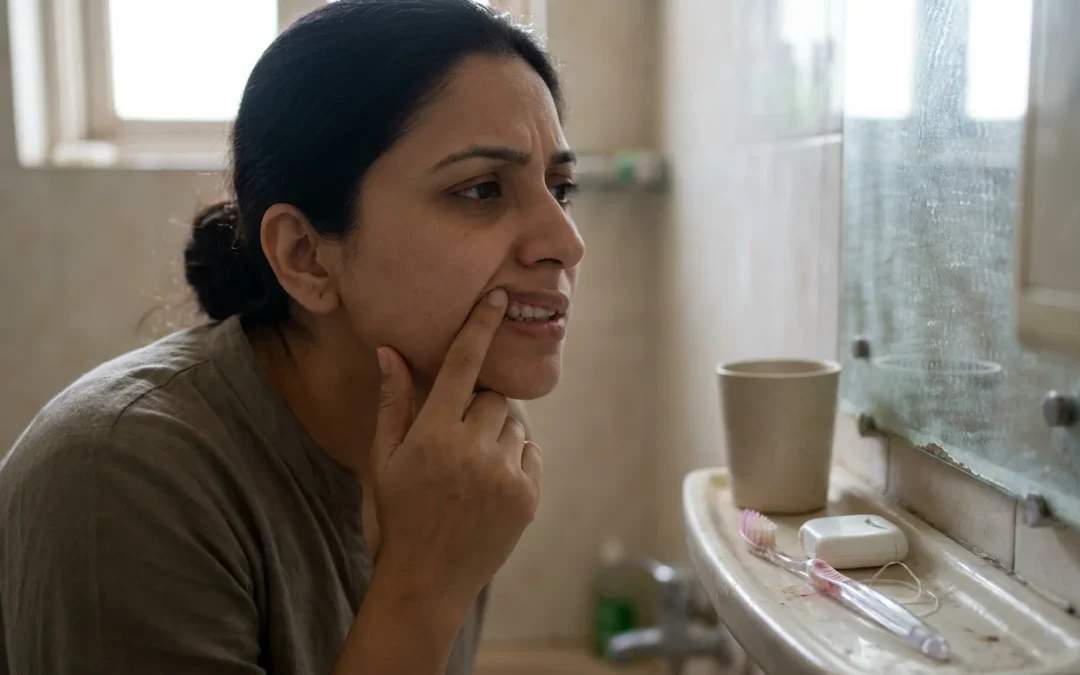
The pink on the toothbrush is one of the most common things people in Pakistan notice about their mouths and one of the least often acted on. It is taken as a sign that the gums are “weak,” that the brush is too hard, or that it runs in the family, and the response is to brush that spot less, rinse with something from the chemist, and wait. Meanwhile the bacteria that caused the bleeding stay exactly where they were. Severe gum disease affects about one in five adults worldwide according to the WHO’s 2022 global report, more than a billion people, and Pakistan’s own 2003 national oral health survey found that about nine in ten older adults had gum disease. Almost all of it began as a gum that bled a little when brushed and was left alone.
This guide explains what is actually happening when gums bleed, the causes in the order you should consider them, how to tell early gingivitis from periodontitis, a two-week home routine that fixes the common cause, what a dentist does when home care is not enough, the smaller number of situations where bleeding gums are a medical sign, and how gum health is connected to the rest of the body. Our English guide to bleeding and swollen gums covers the warning signs for readers who prefer it.
Masoron Se Khoon Anay Ki Asal Wajah
| Cause | How common | How it causes bleeding | Clue that this is yours |
| Plaque at the gumline (gingivitis) | By far the most common | Bacteria release toxins; the gum edge becomes inflamed, swollen and full of fragile blood vessels | Gums look red or puffy rather than pale pink and firm; bleed on brushing or flossing; no pain; bad breath |
| Tartar (calculus) | Very common in adults who have not had a scaling | Plaque hardens into a rough yellow-brown deposit that holds more plaque and cannot be brushed off | Hard deposits visible behind the lower front teeth and at the gumline of the upper molars; bleeding persists despite good brushing |
| Periodontitis | Common after 30; about 1 in 5 adults worldwide have the severe form | Inflammation has spread below the gum into the bone; pockets form between gum and tooth | Gums receding so teeth look longer; gaps appearing; teeth loosening or drifting; pus; bleeding for years |
| Brushing too hard or with a hard brush | Common | Scrubs the gum away rather than cleaning plaque; also causes recession | Bleeding only at specific spots; notches worn into the teeth at the gumline; pain with cold |
| Starting to floss | Normal for the first week | Floss disturbs inflamed gum that has never been cleaned | Bleeding between teeth that fades within 7 to 10 days of daily flossing |
| Pregnancy | Affects 30 to 100% of pregnant women, most often 60 to 75% | Hormones make the gum react more strongly to the same plaque | Begins in the second month, peaks around the eighth, resolves after delivery; the plaque still has to be removed |
| Puberty, menstruation, hormonal change | Common and temporary | Same mechanism as pregnancy | Bleeding worse at certain times of the month |
| Smoking, sheesha | Very common in Pakistan | Damages gum tissue and bone and feeds gum disease; nicotine constricts blood vessels so the gum may bleed less than it should, hiding the disease | Gum disease present with little bleeding; stained teeth; bad breath |
| Naswar, paan, gutka, chhaliya | Common | Direct irritation and burning of the gum where it is held; recession; gum disease | Bleeding and a white or red patch at the spot where the quid is kept |
| Diabetes, especially poorly controlled | Common and underdiagnosed | Diabetes worsens gum disease and gum disease worsens blood sugar control, a two-way link recognised by the International Diabetes Federation | Gum disease that progresses fast, recurring gum abscesses, slow healing, dry mouth |
| Blood-thinning medicines (aspirin, clopidogrel, warfarin, rivaroxaban) | Common in heart patients | Reduce clotting so a slightly inflamed gum bleeds more and longer | Bleeding that takes minutes to stop; the plaque is still the trigger |
| Ill-fitting denture, partial denture clasp, rough filling or crown edge | Common in older adults | Rubs or traps plaque against the gum | Bleeding in one spot next to the appliance or filling |
| Mouth breathing, dry mouth | Fairly common | Dry gum tissue inflames more easily, especially the upper front | Bleeding and puffiness of the upper front gums; snoring; blocked nose |
| Vitamin C deficiency (scurvy) | Uncommon but real in people with very poor diets | Weakens the collagen that holds the gum together | Swollen, purple, bleeding gums with easy bruising and tiredness in someone eating almost no fruit or vegetables |
| Blood disorders (low platelets, clotting disorders, leukaemia) | Uncommon but important | The blood itself does not clot normally | Gums bleed spontaneously without brushing; bruises, nosebleeds, heavy periods, fever, weight loss or tiredness alongside |
The order of the table is the order in which to look. The first three rows account for almost everyone, and the way to tell them apart is simple: clean properly for two weeks, as described below, and see what happens. Gingivitis stops bleeding. Tartar and periodontitis do not, and need a dentist. The bottom two rows are rare, but they are the reason the question “is there bleeding or bruising anywhere else?” should always be asked.
Gingivitis or Periodontitis: How Far Has It Gone?
| Feature | Healthy gums | Gingivitis | Periodontitis |
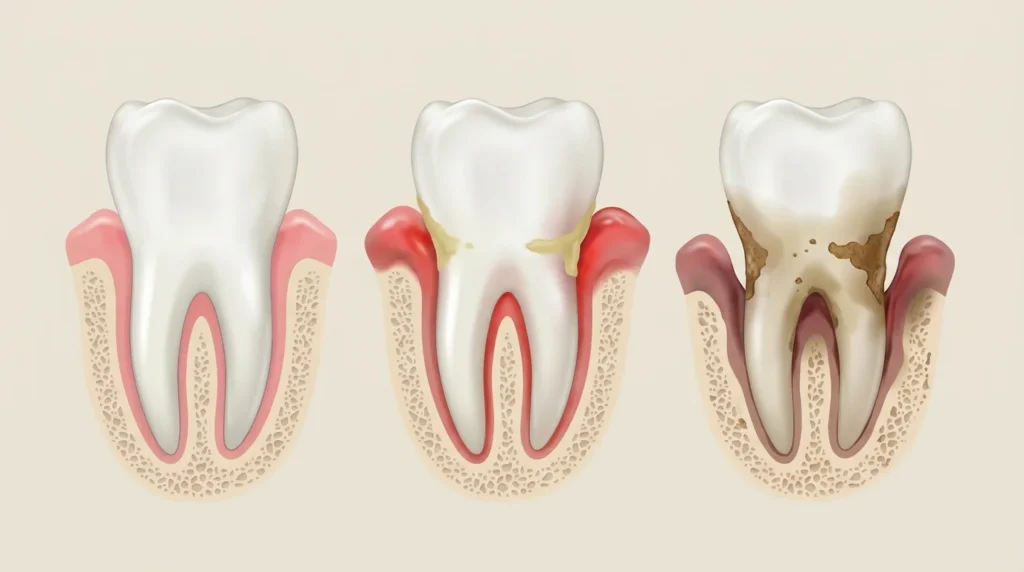
| Colour and shape | Pale pink, firm, knife-edged where it meets the tooth | Red or dark pink, puffy, rounded edge | Red or purplish, may look receded or may be swollen over deep pockets |
| Bleeding | None | On brushing or flossing | On brushing, sometimes spontaneously, sometimes with pus |
| Pain | None | Usually none, sometimes tenderness | Usually none until late; dull ache, sensitivity from exposed roots, abscesses |
| Bone and attachment | Intact | Intact; the damage is confined to the gum | Bone and fibres holding the tooth are lost; pockets of 4 mm or more |
| Tooth movement | None | None | Teeth loosen, drift, gaps open between front teeth |
| Reversible? | Not applicable | Fully, within one to two weeks of proper cleaning | The damage is permanent but the disease can be stopped and controlled |
| Treatment | Daily cleaning | Daily cleaning plus a scaling if tartar is present | Deep scaling and root planing, sometimes gum surgery, then maintenance every three to six months for life |
Gingivitis has been studied directly: in the classic experiments of the 1960s, volunteers with healthy gums stopped all cleaning, developed heavy plaque and generalised mild gingivitis within 9 to 21 days, and then returned to full health within about a week of resuming cleaning. That is the window you are working with. Periodontitis is what gingivitis becomes in a susceptible person after months or years, and about one in five adults worldwide reach its severe form. In Pakistan the 2003 national survey found attachment loss of 5 mm or more in about a fifth of 30-year-olds, which means the disease is already established in many people who still think of themselves as having “slightly weak gums.”
Masoron Se Khoon Rokne Ka Tarika: The Two-Week Home Routine
| Measure | How to do it | Honest verdict |
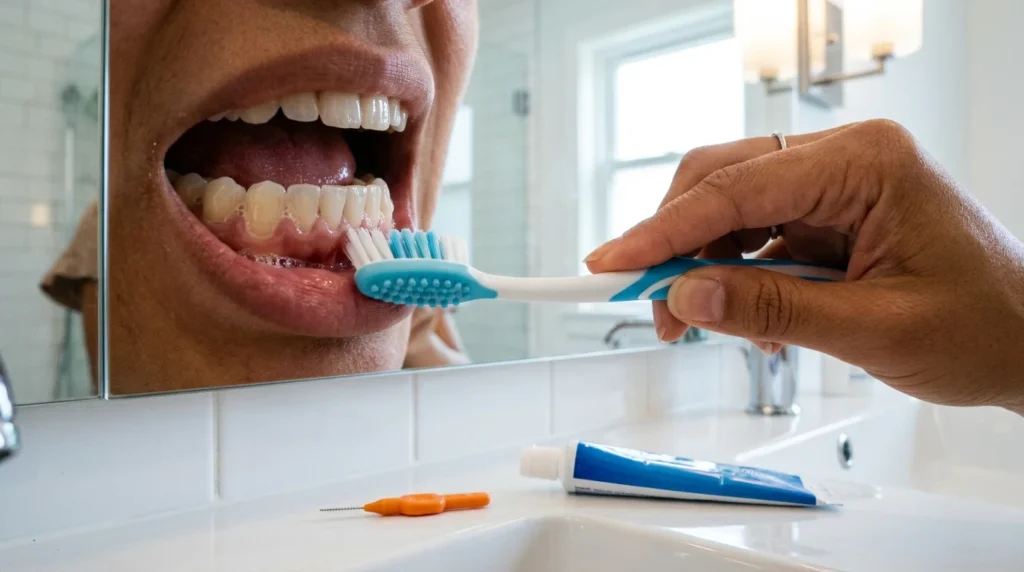
| Brush twice a day for a full two minutes with a soft brush | Angle the bristles at 45 degrees into the gumline and use small vibrating or circular strokes, a few teeth at a time, inside and outside, then the biting surfaces. Time it; most people stop at 40 seconds | The core of the treatment. Bleeding is where the plaque is, so brush the bleeding areas more, not less |
| Clean between the teeth once a day | Interdental brushes sized to fit each gap, or floss curved in a C against each tooth and slid gently below the gumline | Essential; a toothbrush misses the surfaces between teeth, which is where most gingivitis sits. Cochrane evidence suggests interdental brushes reduce gingivitis more than floss where they fit |
| Expect bleeding for the first week | Keep going | Bleeding on flossing that fades within 7 to 10 days is the gum healing, not being injured |
| Fluoride toothpaste | Any standard fluoride paste | Protects the teeth; “gum” or “herbal” pastes do not clean plaque any better than the brush does |
| Electric toothbrush with a pressure sensor | Hold it still on each tooth and let it work | Helpful for people who brush badly or too hard; see our guide on electric vs manual toothbrushes |
| Chlorhexidine 0.12 to 0.2% mouthwash twice a day for up to two weeks | Rinse 30 minutes after brushing | Reduces plaque strongly as a short-term aid; stains teeth brown if used for four weeks or more and does not replace cleaning |
| Warm salt water rinse | After brushing while gums are sore | Soothes; harmless; not a treatment |
| Stop smoking, sheesha, naswar, paan, gutka | Completely | Necessary; gum disease does not fully heal while these continue, and smoking hides the bleeding that would warn you |
| Replace a hard brush with a soft one; replace the brush every three months or when splayed | Soft only | A hard brush damages gum and tooth and cleans no better |
| Check diabetes control | Blood sugar and HbA1c with your doctor if gums are not improving | Uncontrolled sugar prevents healing |
| Eat fruit and vegetables daily | Especially citrus, guava, amla, tomatoes, green chillies | Vitamin C is needed for gum repair; a diet of only roti, chai and meat invites deficiency |
| Brushing less because it bleeds | Do not | The single most common mistake; the plaque stays and the gingivitis worsens |
| “Gum strengthening” powders, manjan, charcoal, salt scrubs | Do not | Abrasive; wear the teeth and gum; no effect on the bacteria |
| Antibiotics from the chemist | Do not | Gingivitis is not treated with antibiotics; they are reserved for specific aggressive or spreading infections under a dentist’s direction |
After two weeks of this routine, done honestly, most people find the bleeding has stopped and the gums have become firmer and paler. If it has not, the next section applies.
Masooray Sujna Aur Kamzor Hone Ka Ilaj: What a Dentist Does
Tartar cannot be brushed off. Once plaque has mineralised into calculus along the gumline and, more importantly, below it on the root surface, it is a permanent rough shelf that holds bacteria however well you brush, and the gum next to it will bleed indefinitely. Scaling and polishing removes it with an ultrasonic instrument and hand scalers in a 30 to 45 minute visit, and for many people with years of bleeding gums this single appointment, followed by the home routine, ends the problem. Scaling does not loosen teeth or thin the enamel; the teeth that feel loose or sensitive afterwards were being held by tartar and have simply been uncovered, and the sensitivity settles within a few weeks. Our guides to how tartar forms and why it must be scaled off and to scaling, root planing and polishing explain the procedure, and our cost guide puts a scaling and polishing session in Pakistan at around PKR 3,000 to 8,000 at a reputable private clinic.
Where the gum has progressed to periodontitis, with pockets of 4 mm or more and bone loss on the X-ray, the treatment is deeper cleaning of the root surfaces, called scaling and root planing, done under local anaesthetic one section of the mouth at a time, typically PKR 8,000 to 20,000 for the full mouth. Systematic reviews show it gains about half a millimetre of attachment on average and reduces bleeding and pocket depth substantially, which sounds modest until you remember that it halts a disease that was taking the teeth. Antibiotics or antiseptic gels placed in the pockets add a small extra benefit in some cases. Deep pockets that remain after this may need minor gum surgery to clean the roots under direct vision. After treatment, periodontitis is controlled rather than cured, and a maintenance cleaning every three to six months for life is what keeps the teeth; patients who return for it keep their teeth, and patients who do not relapse within a year or two. Our gum disease treatment page sets out the stages of care.
When Bleeding Gums Are a Medical Sign
A minority of bleeding gums are not about plaque at all, and the pattern that suggests this is bleeding that does not match the amount of plaque, that happens without brushing, or that comes with signs elsewhere in the body. Gums that bleed spontaneously or for several minutes, alongside bruises you do not remember getting, frequent nosebleeds, heavy periods, tiny red spots under the skin, unusual tiredness, fever or weight loss, need a doctor and a blood count the same week; the NHS lists bleeding gums with easy bruising among the signs of bleeding disorders, and gum bleeding can be an early sign of leukaemia. Swollen, purple, bleeding gums in someone eating almost no fruit or vegetables, with bruising and exhaustion, suggests scurvy, which is uncommon but still seen in Pakistan in the very poor, the elderly living alone and people on extreme diets, and is cured within days by vitamin C. Gum disease that is severe for a person’s age, progressing fast or producing repeated abscesses should prompt a blood sugar test, because undiagnosed diabetes is common in Pakistan and the gums are often where it first shows. And bleeding gums in a pregnant woman are expected, but they are a reason for a scaling in the second trimester and meticulous home care, not a reason to wait until after delivery, because the plaque is still doing damage.
Gum disease is also linked to the rest of the body in ways that are real but easy to overstate. Periodontitis and diabetes genuinely worsen each other, and treating the gums measurably improves blood sugar control. Periodontitis is associated with heart and blood vessel disease independently of the usual risk factors, but the American Heart Association’s position is that the evidence shows an association and does not prove that one causes the other; the same applies to reported links with preterm birth. The honest summary is that healthy gums are part of a healthy body, that the link with diabetes is strong enough to act on, and that nobody should be sold a scaling as a heart treatment.
If your gums have bled for more than a few weeks, if you can see tartar, or if your teeth have begun to look longer or feel loose, you can book an appointment with our periodontal team; the first visit is an assessment with a pocket chart and X-rays, and we will tell you plainly whether this is gingivitis that two weeks of cleaning will fix or periodontitis that needs treatment.
Frequently Asked Questions
Masoron se khoon kyun aata hai?
Almost always because of plaque, the bacterial film at the gumline and between the teeth, which inflames the gum edge within 10 to 21 days of poor cleaning so it bleeds when touched. Tartar, periodontitis, a hard brush, pregnancy, smoking or naswar, diabetes, blood thinners and, rarely, vitamin C deficiency or a blood disorder are the other causes.
Masoron se khoon rokne ka tarika kya hai?
Brush two full minutes twice a day with a soft brush angled into the gumline, clean between the teeth once a day with interdental brushes or floss, and keep going even though it bleeds for the first week. Stop smoking and naswar. Most bleeding stops within one to two weeks. If it does not, you need a scaling.
Kya khoon aane par brush karna band kar dena chahiye?
No. That is the most common mistake. Bleeding marks the places where plaque is sitting, so those places need more careful cleaning, not less. Use a soft brush and gentle strokes rather than scrubbing; the bleeding fades as the gum heals.
Masooron ki sujan ka ilaj kya hai?
Swollen gums are inflamed gums. Remove the cause with proper brushing and interdental cleaning, use a chlorhexidine mouthwash for up to two weeks, and have any tartar scaled off by a dentist. Swelling with pus, loose teeth or severe pain needs a dentist urgently, and swelling with bruising or fever elsewhere needs a doctor.
Kya masoron se khoon aana kisi badi bimari ki nishani ho sakta hai?
Rarely, yes. Gums that bleed without brushing or for minutes at a time, together with bruising, nosebleeds, heavy periods, tiredness, fever or weight loss, need a doctor and a blood test the same week. Fast-progressing gum disease can also be the first sign of undiagnosed diabetes. For most people, though, the cause is plaque and the fix is cleaning.
